
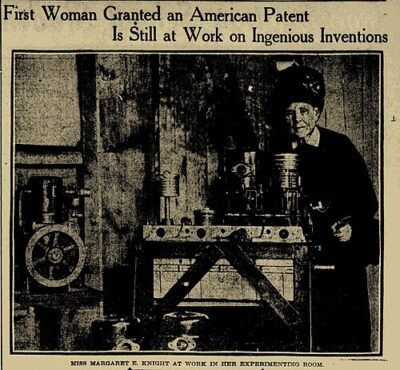
Margaret E. Knight
Margaret E. Knight was an American inventor. Born February 14, 1838, in York. Died October 12, 1914, in Framingham. Educated at fab lab. Awards include National Inventors Hall of Fame.
Facts
12 facts · 2 confirmed by two sources · 6 cited · 4 from one source
Where this comes from
Papalocal keeps its own record. It started from these sources; what each one said is kept here as it was copied, so a change on their side never changes this page by itself. Tap one to read its version.
What Wikidata says · copied November 16, 2026 · revision 2567276238
- Described as
- American inventor (1838–1914)
- Other names
- Margaret Eloise Knight, Margaret Night
- Born
- February 14, 1838 · 3 references
- Died
- October 12, 1914 · 3 references
- Born in
- York · 1 reference
- Died in
- Framingham · 1 reference
- Buried in
- Newton Cemetery · 1 reference
- Citizen of
- United States
- Occupation
- inventor · 2 references; entrepreneur
- Education
- fab lab
- Awards
- National Inventors Hall of Fame (2006) · 1 reference
- Lived in
- Manchester · 1 reference; Springfield
- Wikipedias with a page
- 22
Wikidata item Q431518 (wikidata.org/wiki/Q431518), public domain (CC0). Copied November 16, 2026.
What Wikipedia says · copied November 16, 2026 · revision 1376556810
Margaret Eloise Knight (February 14, 1838 – October 12, 1914) was an American inventor, notably of a machine to produce flat-bottomed paper bags. She has been called "the most famous 19th-century woman inventor". She founded the Eastern Paper Bag Company in 1870, creating paper bags for groceries similar in form to the ones that would be used in later generations. Knight received dozens of patents in different fields and became a symbol for women's empowerment.
- Born, in its opening lines
- February 14, 1838
- Died, in its opening lines
- October 12, 1914
From the Wikipedia article “Margaret E. Knight” (en.wikipedia.org/wiki/Margaret_E._Knight), by its contributors, under CC BY-SA 4.0 (creativecommons.org/licenses/by-sa/4.0/). Copied November 16, 2026; not changed.
Confirmed Two sources agree. Cited One source, and it names where it got it. One source One source, without a reference of its own. Sources disagree The sources disagree. We show the best-supported value and keep theirs below.
