
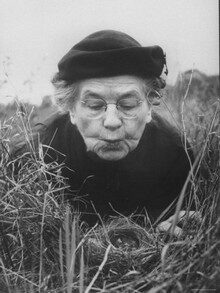
Margaret Morse Nice
Margaret Morse Nice was an American ornithologist. Born December 6, 1883, in Amherst. Died June 26, 1974, in Chicago. Educated at Clark University and Mount Holyoke College. Awards include Brewster Medal.
Facts
13 facts · 2 confirmed by two sources · 4 cited · 7 from one source
Where this comes from
Papalocal keeps its own record. It started from these sources; what each one said is kept here as it was copied, so a change on their side never changes this page by itself. Tap one to read its version.
What Wikidata says · copied November 16, 2026 · revision 2567435464
- Described as
- American ornithologist (1883–1974)
- Born
- December 6, 1883 · 3 references
- Died
- June 26, 1974 · 4 references
- Born in
- Amherst · 1 reference
- Died in
- Chicago · 1 reference
- Citizen of
- United States
- Occupation
- ornithologist · 1 reference; university teacher; naturalist
- Worked for
- Ohio State University
- Education
- Clark University; Mount Holyoke College
- Awards
- Brewster Medal (1942) · 1 reference
- Father
- Anson D. Morse
- Wikipedias with a page
- 22
Wikidata item Q441124 (wikidata.org/wiki/Q441124), public domain (CC0). Copied November 16, 2026.
What Wikipedia says · copied November 16, 2026 · revision 1380781735
Margaret Morse Nice (December 6, 1883 – June 26, 1974) was an American ornithologist, ethologist, and child psychologist who made an extensive study of the life history of the song sparrow and was author of Studies in the Life History of the Song Sparrow (1937). She observed and recorded hierarchies in chickens about three decades ahead of Thorleif Schjelderup-Ebbe, who coined the term "pecking order". After her marriage, she made observations on language learning in her children and wrote numerous research papers.
- Born, in its opening lines
- December 6, 1883
- Died, in its opening lines
- June 26, 1974
From the Wikipedia article “Margaret Morse Nice” (en.wikipedia.org/wiki/Margaret_Morse_Nice), by its contributors, under CC BY-SA 4.0 (creativecommons.org/licenses/by-sa/4.0/). Copied November 16, 2026; not changed.
Confirmed Two sources agree. Cited One source, and it names where it got it. One source One source, without a reference of its own. Sources disagree The sources disagree. We show the best-supported value and keep theirs below.
