
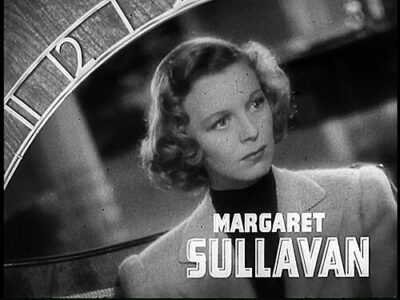
Margaret Sullavan
Margaret Sullavan was an American actress. Born May 16, 1909, in Norfolk. Died January 1, 1960, in New Haven. Educated at Chatham Hall. Awards include star on Hollywood Walk of Fame and Donaldson Awards.
Facts
25 facts · 2 confirmed by two sources · 10 cited · 13 from one source
Where this comes from
Papalocal keeps its own record. It started from these sources; what each one said is kept here as it was copied, so a change on their side never changes this page by itself. Tap one to read its version.
What Wikidata says · copied November 13, 2026 · revision 2567678232
- Described as
- American actress
- Other names
- Margaret Brooke Sullavan
- Born
- May 16, 1909 · 9 references
- Died
- January 1, 1960 · 9 references
- Born in
- Norfolk · 1 reference
- Died in
- New Haven · 1 reference
- Buried in
- Virginia
- Cause of death
- drug overdose
- Citizen of
- United States
- Occupation
- film actor; stage actor; television actor · 1 reference; actor · 1 reference
- Education
- Chatham Hall
- Awards
- star on Hollywood Walk of Fame · 1 reference; Donaldson Awards
- Field
- film acting · 1 reference; acting · 1 reference
- Spouse
- Leland Hayward (1936–1947) · 1 reference; Henry Fonda (1931–1933) · 2 references; William Wyler (1934–1936) · 2 references; Kenneth Wagg (1950–) · 1 reference
- Children
- Brooke Hayward · 1 reference; Bridget Hayward · 1 reference; William Leland Hayward · 1 reference
- Father
- Cornelius Sullavan · 1 reference
- Mother
- Garland Brooke Council · 1 reference
- Wikipedias with a page
- 44
Wikidata item Q238036 (wikidata.org/wiki/Q238036), public domain (CC0). Copied November 13, 2026.
What Wikipedia says · copied November 13, 2026 · revision 1350435930
Margaret Brooke Sullavan (May 16, 1909 – January 1, 1960) was an American stage and film actress. She began her career onstage in 1929 with the University Players on Cape Cod, Massachusetts. In 1933, she caught the attention of film director John M. Stahl and made her screen debut that same year in Only Yesterday. She continued to be successful on stage and film, best known for The Shop Around the Corner.
Sullavan preferred working on the stage and made only 16 films, four of which were opposite close friend James Stewart in a popular partnership that included The Mortal Storm and The Shop Around the Corner. Stewart and Sullavan were also close friends of Henry Fonda, to whom Sullavan was married from 1931 to 1933. She was nominated for an Academy Award for Best Actress for her performance in Three Comrades (1938). In the early 1940s, she retired from the screen to devote herself to her children and stage work. She returned to the screen in 1950 to make her last film, No Sad Songs for Me, in which she played a woman dying of cancer. For the rest of her career, she appeared only on the stage. Popular stage portrayals included Terry Randall in Stage Door, Sally Middleton in The Voice of the Turtle and Sabrina Fairchild in Sabrina Fair.
- Born, in its opening lines
- May 16, 1909
- Died, in its opening lines
- January 1, 1960
From the Wikipedia article “Margaret Sullavan” (en.wikipedia.org/wiki/Margaret_Sullavan), by its contributors, under CC BY-SA 4.0 (creativecommons.org/licenses/by-sa/4.0/). Copied November 13, 2026; not changed.
Confirmed Two sources agree. Cited One source, and it names where it got it. One source One source, without a reference of its own. Sources disagree The sources disagree. We show the best-supported value and keep theirs below.
