
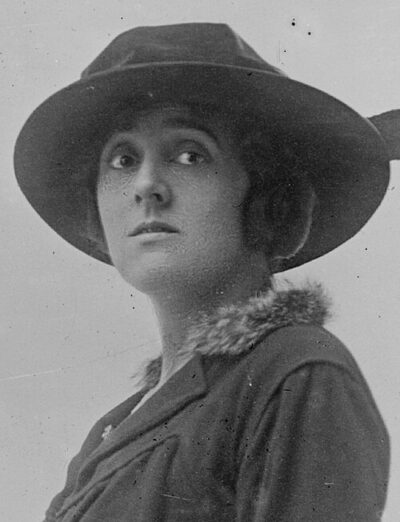
Margaret Wycherly
Margaret Wycherly was an English stage and film actress. Born October 26, 1881, in London. Died June 6, 1956, in New York City.
Facts
12 facts · 2 confirmed by two sources · 4 cited · 6 from one source
Where this comes from
Papalocal keeps its own record. It started from these sources; what each one said is kept here as it was copied, so a change on their side never changes this page by itself. Tap one to read its version.
What Wikidata says · copied November 18, 2026 · revision 2568844537
- Described as
- English stage and film actress (1881-1956)
- Other names
- Margaret Weycherle, Margaret De Wolfe Wycherly, Margaret De Wolfe
- Born
- October 26, 1881 · 3 references
- Died
- June 6, 1956 · 2 references
- Born in
- London · 1 reference
- Died in
- New York City · 1 reference
- Cause of death
- disease
- Citizen of
- United Kingdom
- Occupation
- stage actor; film actor; actor · 1 reference
- Member of
- Heterodoxy · 1 reference
- Spouse
- Bayard Veiller (1901–1922)
- Children
- Anthony Veiller
- Wikipedias with a page
- 20
Wikidata item Q4690 (wikidata.org/wiki/Q4690), public domain (CC0). Copied November 18, 2026.
What Wikipedia says · copied November 18, 2026 · revision 1368041542
Margaret De Wolfe Wycherly (26 October 1881 – 6 June 1956) was an English actress. A prolific stage and screen performer, she spent many years in the United States and is best remembered for her Broadway roles and Hollywood character parts. On screen she played mother to Gary Cooper (Sergeant York) and James Cagney (White Heat). She was nominated for the Academy Award for Best Supporting Actress for her role in Sergeant York (1941) but lost to Mary Astor for The Great Lie (1941).
- Born, in its opening lines
- October 26, 1881
- Died, in its opening lines
- June 6, 1956
From the Wikipedia article “Margaret Wycherly” (en.wikipedia.org/wiki/Margaret_Wycherly), by its contributors, under CC BY-SA 4.0 (creativecommons.org/licenses/by-sa/4.0/). Copied November 18, 2026; not changed.
Confirmed Two sources agree. Cited One source, and it names where it got it. One source One source, without a reference of its own. Sources disagree The sources disagree. We show the best-supported value and keep theirs below.
