
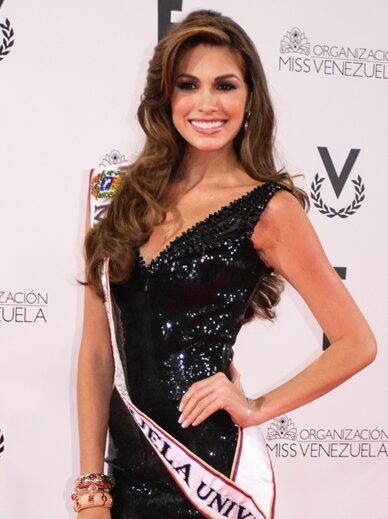
María Gabriela Isler
María Gabriela Isler is a Venezuelan model and beauty pageant titleholder. Born April 21, 1988, in Valencia. Awards include Miss Universe and Miss Venezuela 2012.
Facts
12 facts · 0 confirmed by two sources · 0 cited · 11 from one source · 1 where the sources disagree
What’s different
- Born: we show April 21, 1988 (Sources disagree). Wikipedia says March 21, 1988
Where this comes from
Papalocal keeps its own record. It started from these sources; what each one said is kept here as it was copied, so a change on their side never changes this page by itself. Tap one to read its version.
What Wikidata says · copied November 16, 2026 · revision 2569779821
- Described as
- Venezuelan model and beauty pageant titleholder
- Other names
- Gabriela Isler, Maria Gabriela Isler
- Born
- April 21, 1988
- Born in
- Valencia
- Citizen of
- Venezuela; Switzerland
- Occupation
- model; beauty pageant contestant; television presenter
- Awards
- Miss Universe (2013); Miss Venezuela 2012
- Lived in
- Maracay; Valencia
- Height
- 1.78 m (5 ft 10 in)
- Wikipedias with a page
- 31
Wikidata item Q3293482 (wikidata.org/wiki/Q3293482), public domain (CC0). Copied November 16, 2026.
What Wikipedia says · copied November 16, 2026 · revision 1379405997
María Gabriela de Jesús Isler Morales (Spanish pronunciation: [ɡaˈβɾjela isˈleɾ]; born 21 March 1988) is a Venezuelan beauty pageant titleholder who gained international recognition by winning the titles of Miss Venezuela 2012 and Miss Universe 2013.
She passed on her Miss Universe crown in early 2015. Following her reign, Isler accepted a proposal from Donald Trump to work with the Miss Universe Organization as the organization's business and export manager for two years.
- Born, in its opening lines
- March 21, 1988
From the Wikipedia article “Gabriela Isler” (en.wikipedia.org/wiki/Gabriela_Isler), by its contributors, under CC BY-SA 4.0 (creativecommons.org/licenses/by-sa/4.0/). Copied November 16, 2026; not changed.
Confirmed Two sources agree. Cited One source, and it names where it got it. One source One source, without a reference of its own. Sources disagree The sources disagree. We show the best-supported value and keep theirs below.
