
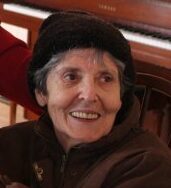
María Irene Fornés
María Irene Fornés was an American playwright and writer. Born May 14, 1930, in Havana. Died October 30, 2018, in Manhattan. Known for Fefu and Her Friends and Sarita. Awards include Guggenheim Fellowship, Obie Award and PEN/Laura Pels International Foundation for Theater Award.
Facts
23 facts · 2 confirmed by two sources · 18 cited · 3 from one source
Where this comes from
Papalocal keeps its own record. It started from these sources; what each one said is kept here as it was copied, so a change on their side never changes this page by itself. Tap one to read its version.
What Wikidata says · copied November 18, 2026 · revision 2567402769
- Described as
- American playwright and writer (1930-2018)
- Other names
- Maria Irene Fornes
- Born
- May 14, 1930 · 8 references
- Died
- October 30, 2018 · 4 references
- Born in
- Havana · 2 references
- Died in
- Manhattan · 1 reference
- Cause of death
- Alzheimer's disease · 1 reference
- Citizen of
- United States; Cuba · 1 reference
- Occupation
- playwright · 2 references; theatre director · 2 references; writer · 2 references; academic · 1 reference; director · 1 reference; teacher · 1 reference
- Known for
- Fefu and Her Friends · 2 references; Sarita
- Awards
- Guggenheim Fellowship (1972) · 1 reference; Obie Award (1982) · 1 reference; PEN/Laura Pels International Foundation for Theater Award; star on Playwrights' Sidewalk · 1 reference; Bill Whitehead Award (2014) · 1 reference
- Field
- drama · 1 reference; theatre · 1 reference; pedagogy · 1 reference
- Wikipedias with a page
- 18
Wikidata item Q959128 (wikidata.org/wiki/Q959128), public domain (CC0). Copied November 18, 2026.
What Wikipedia says · copied November 18, 2026 · revision 1378535619
María Irene Fornés (May 14, 1930 – October 30, 2018) was a Cuban and American playwright, director, and teacher. She was an important figure in the development of New York’s off-off-Broadway movement and Downtown Arts Scene. Over the course of her career, she wrote more than forty plays and musicals, won nine Obie Awards, and mentored "thousands of playwrights across the globe". Her play What of the Night? was a finalist for the Pulitzer Prize for Drama in 1990, the first work by a Latino playwright to receive said distinction. Signature Theatre Company devoted its 1999–2000 season to her work, while The Public Theater presented a fourteen-play "Fornés Marathon" in 2018.
Her notable works include Promenade (1965), Fefu and Her Friends (1977), Mud (1983), Sarita (1984), and Letters from Cuba (2000). Her plays have been produced both on and off Broadway, as well as internationally". Many theater luminaries—including Tony Kushner, Caryl Churchill, Paula Vogel, Lanford Wilson, and Edward Albee—have acknowledged her influence. Wilson remarked that her work "has no precedents; it isn’t derived from anything… She’s the most original of us all". Vogel similarly noted, "In the work of every American playwright at the end of the 20th century, there are only two stages: before you have read María Irene Fornés – and after".
Fornés taught playwriting at New York University for thirty-three years (1966–1999) and received an honorary Doctor of Letters from Bates College in 1992. As the director of INTAR Theatre’s Hispanic Playwrights-in-Residence Lab, she mentored multiple generations of Latino playwrights, including Cherríe Moraga, Migdalia Cruz, Nilo Cruz, Caridad Svich, and Eduardo Machado. Notices of her death in The New York Times, Los Angeles Times, and Vogue described Fornés as "a pioneer of the American theater", "a totemic figure to many academics and artists", and "among the most influential Latinx voices of the 20th century".
- Born, in its opening lines
- May 14, 1930
- Died, in its opening lines
- October 30, 2018
From the Wikipedia article “María Irene Fornés” (en.wikipedia.org/wiki/María_Irene_Fornés), by its contributors, under CC BY-SA 4.0 (creativecommons.org/licenses/by-sa/4.0/). Copied November 18, 2026; not changed.
Confirmed Two sources agree. Cited One source, and it names where it got it. One source One source, without a reference of its own. Sources disagree The sources disagree. We show the best-supported value and keep theirs below.
