
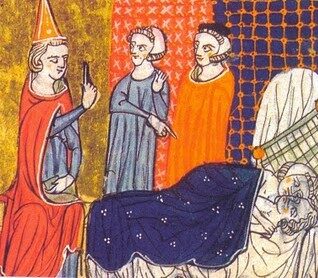
Maria of Montpellier was a Queen of Aragon. Born 1182, in Montpellier. Died April 21, 1213, in Rome.
Facts
18 facts · 2 confirmed by two sources · 3 cited · 13 from one source
Where this comes from
Papalocal keeps its own record. It started from these sources; what each one said is kept here as it was copied, so a change on their side never changes this page by itself. Tap one to read its version.
What Wikidata says · copied November 17, 2026 · revision 2378564511
- Described as
- Queen of Aragon (1182-1213)
- Other names
- Marie of Montpellier
- Born
- 1182
- Died
- April 21, 1213 · 1 reference
- Born in
- Montpellier
- Died in
- Rome
- Buried in
- Old St. Peter's Basilica · 1 reference
- Citizen of
- France
- Occupation
- politician
- Spouse
- Peter II of Aragon (1204–1213) · 3 references; Raymond Geoffrey of Marseille; Bernard IV of Comminges (–1204) · 1 reference
- Children
- James I of Aragon · 1 reference; Pétronille de Comminges; Sancha of Aragon
- Father
- William VIII of Montpellier
- Mother
- Eudokia Komnene
- Siblings
- Guillem IX de Montpeller; Agnes of Montpellier
- Religion
- Christianity
- Wikipedias with a page
- 25
Wikidata item Q268731 (wikidata.org/wiki/Q268731), public domain (CC0). Copied November 17, 2026.
What Wikipedia says · copied November 17, 2026 · revision 1381187401
Marie of Montpellier (adapted from Occitan: Maria de Montpelhièr) (1182 – 21 April 1213) was Lady of Montpellier and by her three marriages Viscountess of Marseille, Countess of Comminges and Queen of Aragon.
She was the daughter of William VIII, Lord of Montpellier, and Eudokia Komnene, a niece of Byzantine Emperor Manuel I Komnenos.
- Born, in its opening lines
- 1182
- Died, in its opening lines
- April 21, 1213
From the Wikipedia article “Maria of Montpellier” (en.wikipedia.org/wiki/Maria_of_Montpellier), by its contributors, under CC BY-SA 4.0 (creativecommons.org/licenses/by-sa/4.0/). Copied November 17, 2026; not changed.
Confirmed Two sources agree. Cited One source, and it names where it got it. One source One source, without a reference of its own. Sources disagree The sources disagree. We show the best-supported value and keep theirs below.
