
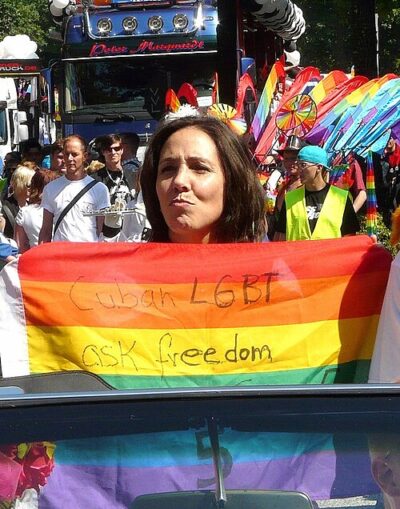
Mariela Castro Espín is a Cuban activist. Born July 27, 1962, in Havana. Positions held include director (1994–) and member of the National Assembly of People's Power (2013–).
Facts
18 facts · 1 confirmed by two sources · 4 cited · 13 from one source
Where this comes from
Papalocal keeps its own record. It started from these sources; what each one said is kept here as it was copied, so a change on their side never changes this page by itself. Tap one to read its version.
What Wikidata says · copied November 17, 2026 · revision 2567501293
- Described as
- Cuban activist
- Other names
- Mariela Castro
- Born
- July 27, 1962
- Born in
- Havana · 1 reference
- Name at birth
- Mariela Castro Espín
- Citizen of
- Cuba
- Occupation
- psychologist; pedagogue · 1 reference; university teacher; journalist; politician; social activist
- Positions held
- director (1994–); member of the National Assembly of People's Power (2013–)
- Field
- sexology
- Spouse
- Juan Gutiérrez Fischmann (–1989)
- Father
- Raúl Castro · 1 reference
- Mother
- Vilma Espin Guillois · 1 reference
- Siblings
- Alejandro Castro Espín
- Religion
- atheism
- Wikipedias with a page
- 27
Wikidata item Q253736 (wikidata.org/wiki/Q253736), public domain (CC0). Copied November 17, 2026.
What Wikipedia says · copied November 17, 2026 · revision 1356276297
Mariela Castro Espín (born 27 July 1962) is the director of the Cuban National Center for Sex Education in Havana, as well as the National Commission for Comprehensive Attention to Transsexual People, and an activist for LGBT rights in Cuba. Castro is an outspoken advocate for the LGBT+ community as well as dissolving some of the antiquated stigmas and stereotypes that surround the community. She is the daughter of former Communist Party First Secretary Raúl Castro and feminist and revolutionary Vilma Espín, and the niece of former First Secretary Fidel Castro.
- Born, in its opening lines
- July 27, 1962
From the Wikipedia article “Mariela Castro” (en.wikipedia.org/wiki/Mariela_Castro), by its contributors, under CC BY-SA 4.0 (creativecommons.org/licenses/by-sa/4.0/). Copied November 17, 2026; not changed.
Confirmed Two sources agree. Cited One source, and it names where it got it. One source One source, without a reference of its own. Sources disagree The sources disagree. We show the best-supported value and keep theirs below.
