
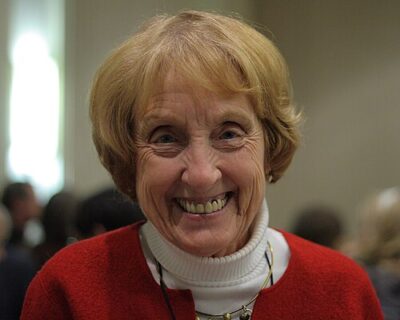
Marilyn Bailey Ogilvie
Marilyn Bailey Ogilvie is an American historian of women in science. Born March 22, 1936, in Duncan. Educated at University of Kansas and University of Oklahoma.
Facts
12 facts · 1 confirmed by two sources · 4 cited · 7 from one source
Where this comes from
Papalocal keeps its own record. It started from these sources; what each one said is kept here as it was copied, so a change on their side never changes this page by itself. Tap one to read its version.
What Wikidata says · copied November 20, 2026 · revision 2571787124
- Described as
- American historian of women in science
- Born
- March 22, 1936
- Born in
- Duncan · 1 reference
- Citizen of
- United States
- Occupation
- historian; historian of science · 1 reference; university teacher · 1 reference
- Worked for
- University of Oklahoma
- Education
- University of Kansas; University of Oklahoma; Baker University
- Field
- history of science and technology · 1 reference; history of science · 1 reference
- Wikipedias with a page
- 10
Wikidata item Q16733642 (wikidata.org/wiki/Q16733642), public domain (CC0). Copied November 20, 2026.
What Wikipedia says · copied November 20, 2026 · revision 1351372518
Marilyn Bailey Ogilvie (born March 22, 1936) is an American historian of science known especially for her work on the history of women in science. She taught at Oklahoma Baptist University before becoming curator of the History of Science Collections and professor at the University of Oklahoma. She is currently Curator Emeritus, History of Science Collections and Professor Emeritus, Department of the History of Science at the university.
- Born, in its opening lines
- March 22, 1936
From the Wikipedia article “Marilyn Bailey Ogilvie” (en.wikipedia.org/wiki/Marilyn_Bailey_Ogilvie), by its contributors, under CC BY-SA 4.0 (creativecommons.org/licenses/by-sa/4.0/). Copied November 20, 2026; not changed.
Confirmed Two sources agree. Cited One source, and it names where it got it. One source One source, without a reference of its own. Sources disagree The sources disagree. We show the best-supported value and keep theirs below.
