
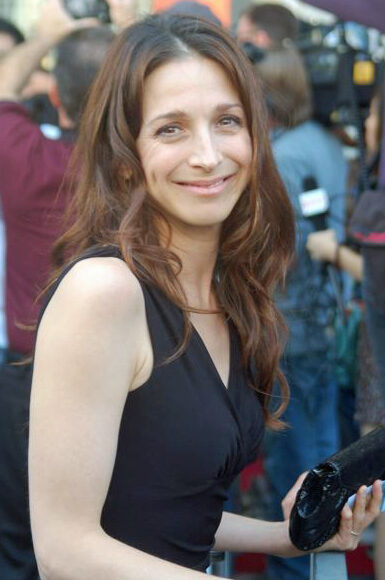
Marin Hinkle
Marin Hinkle is an American actress. Born March 23, 1966, in Dar es Salaam. Known for The Marvelous Mrs. Maisel and Two and a Half Men. Educated at Brown University and New York University Tisch School of the Arts.
Facts
12 facts · 1 confirmed by two sources · 1 cited · 10 from one source
Where this comes from
Papalocal keeps its own record. It started from these sources; what each one said is kept here as it was copied, so a change on their side never changes this page by itself. Tap one to read its version.
What Wikidata says · copied November 15, 2026 · revision 2546607700
- Described as
- American actress
- Other names
- Marin Elizabeth Hinkle
- Born
- March 23, 1966 · 1 reference
- Born in
- Dar es Salaam
- Citizen of
- United States
- Occupation
- actor · 1 reference; television actor; film actor; stage actor
- Education
- Brown University; New York University Tisch School of the Arts; Newton South High School · 1 reference
- Known for
- The Marvelous Mrs. Maisel; Two and a Half Men
- Wikipedias with a page
- 32
Wikidata item Q234438 (wikidata.org/wiki/Q234438), public domain (CC0). Copied November 15, 2026.
What Wikipedia says · copied November 15, 2026 · revision 1374672344
Marin Hinkle (born March 23, 1966) is an American actress. Among many television and movie roles, she is best known for playing Judy Brooks in the ABC television drama Once and Again (1999–2002), Judith Harper-Melnick in the CBS sitcom Two and a Half Men (2003–2015), and Rose Weissman in the Amazon Prime Video comedy-drama series The Marvelous Mrs. Maisel (2017–2023). For her role in The Marvelous Mrs. Maisel, Hinkle was nominated for the Primetime Emmy Award for Outstanding Supporting Actress in a Comedy Series in 2019 and 2020.
- Born, in its opening lines
- March 23, 1966
From the Wikipedia article “Marin Hinkle” (en.wikipedia.org/wiki/Marin_Hinkle), by its contributors, under CC BY-SA 4.0 (creativecommons.org/licenses/by-sa/4.0/). Copied November 15, 2026; not changed.
Confirmed Two sources agree. Cited One source, and it names where it got it. One source One source, without a reference of its own. Sources disagree The sources disagree. We show the best-supported value and keep theirs below.
