
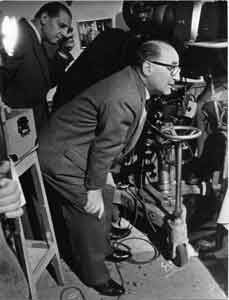
Mario Camerini
Mario Camerini was an Italian film director and screenwriter. Born February 6, 1895, in Rome. Died February 4, 1981, in Gardone Riviera.
Facts
12 facts · 2 confirmed by two sources · 4 cited · 6 from one source
What’s different
- Died: we show February 4, 1981 (Confirmed). Wikidata also lists April 2, 1981
Where this comes from
Papalocal keeps its own record. It started from these sources; what each one said is kept here as it was copied, so a change on their side never changes this page by itself. Tap one to read its version.
What Wikidata says · copied November 17, 2026 · revision 2569005034
- Described as
- Italian film director and screenwriter (1895–1981)
- Born
- February 6, 1895 · 4 references
- Died
- February 4, 1981 · 2 references; April 2, 1981 · 1 reference
- Born in
- Rome · 1 reference
- Died in
- Gardone Riviera
- Citizen of
- Italy (1946–); Kingdom of Italy (–1946)
- Occupation
- film director; screenwriter · 1 reference; film editor; director · 1 reference; writer · 1 reference
- Spouse
- Assia Noris (1940–1943)
- Wikipedias with a page
- 24
Wikidata item Q53013 (wikidata.org/wiki/Q53013), public domain (CC0). Copied November 17, 2026.
What Wikipedia says · copied November 17, 2026 · revision 1362633062
Mario Camerini (6 February 1895 – 4 February 1981) was an Italian film director and screenwriter. Camerini made the most well-known films in Italy during the 1930s, most of them comedies starring Vittorio De Sica. He directed about fifty films until 1972, including 1954's Ulysses with American stars Kirk Douglas and Anthony Quinn, one of the first Europe/US film co-productions.
- Born, in its opening lines
- February 6, 1895
- Died, in its opening lines
- February 4, 1981
From the Wikipedia article “Mario Camerini” (en.wikipedia.org/wiki/Mario_Camerini), by its contributors, under CC BY-SA 4.0 (creativecommons.org/licenses/by-sa/4.0/). Copied November 17, 2026; not changed.
Confirmed Two sources agree. Cited One source, and it names where it got it. One source One source, without a reference of its own. Sources disagree The sources disagree. We show the best-supported value and keep theirs below.
