
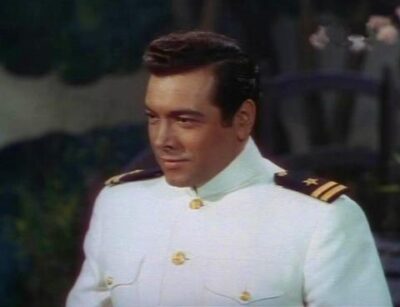
Mario Lanza
Mario Lanza was an American tenor and actor. Born January 31, 1921, in Philadelphia. Died October 7, 1959, in Rome. Educated at South Philadelphia High School. Awards include star on Hollywood Walk of Fame.
Facts
18 facts · 2 confirmed by two sources · 5 cited · 11 from one source
Where this comes from
Papalocal keeps its own record. It started from these sources; what each one said is kept here as it was copied, so a change on their side never changes this page by itself. Tap one to read its version.
What Wikidata says · copied November 13, 2026 · revision 2563860310
- Described as
- American tenor and actor (1921-1959)
- Other names
- Alfredo Arnold Cocozza, Alfred Arnold Cocozza
- Born
- January 31, 1921 · 10 references
- Died
- October 7, 1959 · 10 references
- Born in
- Philadelphia · 1 reference
- Died in
- Rome · 1 reference
- Buried in
- Holy Cross Cemetery
- Cause of death
- myocardial infarction
- Name at birth
- Alfred Arnold Cocozza · 1 reference
- Citizen of
- United States
- Occupation
- opera singer · 1 reference; film actor; singer · 1 reference; actor · 1 reference
- Education
- South Philadelphia High School · 1 reference
- Genre
- opera · 1 reference
- Instrument
- voice
- Record label
- RCA Victor
- Awards
- star on Hollywood Walk of Fame · 1 reference
- Website
- http://www.lanzalegend.com
- Wikipedias with a page
- 47
Wikidata item Q299331 (wikidata.org/wiki/Q299331), public domain (CC0). Copied November 13, 2026.
What Wikipedia says · copied November 13, 2026 · revision 1385127325
Mario Lanza (US: LA(H)N-zə; Italian: [ˈmaːrjo ˈlantsa]; born Alfredo Arnold Cocozza [alˈfreːdo koˈkottsa]; January 31, 1921 – October 7, 1959) was an American tenor and actor. He was a Hollywood film star popular in the late 1940s and the 1950s. Lanza began studying to be a professional singer at the age of 16. After appearing at the Hollywood Bowl in 1947, Lanza signed a seven-year film contract with Louis B. Mayer, the head of Metro-Goldwyn-Mayer, who saw his performance and was impressed by his singing. Prior to that, the adult Lanza sang only two performances of an opera. The following year (1948) he sang the role of Pinkerton in Puccini's Madama Butterfly in New Orleans.
His film debut for MGM was in That Midnight Kiss (1949) with Kathryn Grayson and Ethel Barrymore. A year later, in The Toast of New Orleans, his featured popular song "Be My Love" became his first million-selling hit. In 1951, he starred as tenor Enrico Caruso, his idol, in the biopic The Great Caruso, which produced another million-seller with "The Loveliest Night of the Year" (a song which used the melody of Sobre las Olas). The Great Caruso was the 11th top-grossing film that year.
The title song of his next film, Because You're Mine, was his final million-selling hit song. The song went on to receive an Academy Award nomination for Best Original Song. After recording the soundtrack for his next film, The Student Prince, he embarked upon a protracted battle with studio head Dore Schary arising from artistic differences with director Curtis Bernhardt and was eventually fired by MGM.
Lanza was known to be "rebellious, tough, and ambitious". During most of his film career, he suffered from addictions to overeating and alcohol, which had a serious effect on his health and his relationships with directors, producers, and, occasionally, other cast members. Hollywood columnist Hedda Hopper writes that "his smile, which was as big as his voice, was matched with the habits of a tiger cub, impossible to housebreak." She adds that he was the "last of the great romantic performers". He made three more films before dying of an apparent pulmonary embolism at the age of 38. At the time of his death in 1959, he was still "the most famous tenor in the world". Author Eleonora Kimmel concludes that Lanza "blazed like a meteor whose light lasts a brief moment in time".
- Born, in its opening lines
- January 31, 1921
- Died, in its opening lines
- October 7, 1959
From the Wikipedia article “Mario Lanza” (en.wikipedia.org/wiki/Mario_Lanza), by its contributors, under CC BY-SA 4.0 (creativecommons.org/licenses/by-sa/4.0/). Copied November 13, 2026; not changed.
Confirmed Two sources agree. Cited One source, and it names where it got it. One source One source, without a reference of its own. Sources disagree The sources disagree. We show the best-supported value and keep theirs below.
