
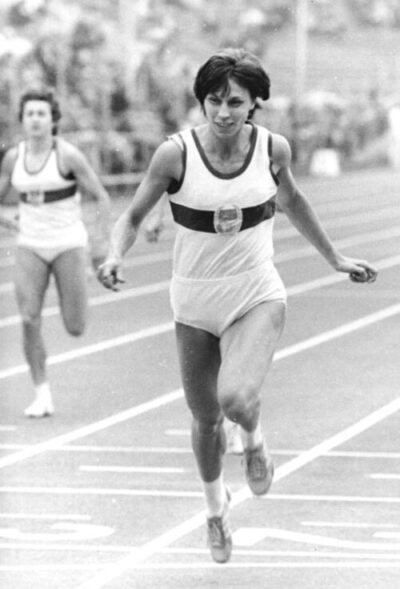
Marita Koch
Marita Koch is an East German sprint track and field athlete. Born February 18, 1957, in Wismar. Awards include Patriotic Order of Merit in Gold, Grand Star of People's Friendship and East German Sportspersonality of the Year (5 times).
Facts
15 facts · 1 confirmed by two sources · 2 cited · 12 from one source
Where this comes from
Papalocal keeps its own record. It started from these sources; what each one said is kept here as it was copied, so a change on their side never changes this page by itself. Tap one to read its version.
What Wikidata says · copied November 16, 2026 · revision 2558156231
- Described as
- East German sprint track and field athlete (born 1957)
- Other names
- Marita Koch Meier, Marita Meier-Koch
- Born
- February 18, 1957 · 4 references
- Born in
- Wismar · 1 reference
- Citizen of
- Germany; East Germany
- Occupation
- sprinter; athletics competitor
- Sport
- athletics
- Awards
- Patriotic Order of Merit in Gold; Grand Star of People's Friendship; East German Sportspersonality of the Year (5 times) (1978, 1979, 1982, 1983, 1985); Patriotic Order of Merit in Silver; Patriotic Order of Merit in Bronze; IAAF Hall of Fame (2014) · 1 reference
- Spouse
- Wolfgang Meier · 1 reference
- Height
- 1.71 m (5 ft 7 in)
- Wikipedias with a page
- 42
Wikidata item Q154559 (wikidata.org/wiki/Q154559), public domain (CC0). Copied November 16, 2026.
What Wikipedia says · copied November 16, 2026 · revision 1386076253
Marita Koch (later Meier-Koch; born 18 February 1957) is a German former sprint track and field athlete. During her career she set 16 world records in outdoor sprints as well as 14 world records in indoor events. Her record of 47.60 in the 400 metres, set on 6 October 1985, still stands.
- Born, in its opening lines
- February 18, 1957
From the Wikipedia article “Marita Koch” (en.wikipedia.org/wiki/Marita_Koch), by its contributors, under CC BY-SA 4.0 (creativecommons.org/licenses/by-sa/4.0/). Copied November 16, 2026; not changed.
Confirmed Two sources agree. Cited One source, and it names where it got it. One source One source, without a reference of its own. Sources disagree The sources disagree. We show the best-supported value and keep theirs below.
