
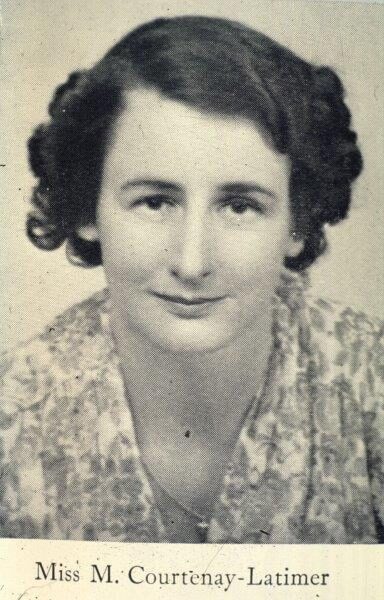
Marjorie Courtenay-Latimer
Marjorie Courtenay-Latimer was a South African naturalist. Born February 24, 1907, in East London. Died May 17, 2004, in East London. Awards include honorary doctor of Rhodes University.
Facts
14 facts · 2 confirmed by two sources · 2 cited · 10 from one source
Where this comes from
Papalocal keeps its own record. It started from these sources; what each one said is kept here as it was copied, so a change on their side never changes this page by itself. Tap one to read its version.
What Wikidata says · copied November 17, 2026 · revision 2564189288
- Described as
- South African naturalist (1907–2004)
- Other names
- M. Courtenay-Latimer, Marjorie Eileen Doris Courtenay-Latimer
- Born
- February 24, 1907
- Died
- May 17, 2004
- Born in
- East London
- Died in
- East London
- Name at birth
- Marjorie Eileen Doris Courtenay-Latimer
- Citizen of
- South Africa
- Occupation
- naturalist; curator (1931–); biologist · 1 reference; botanical collector · 1 reference; zoological collector · 1 reference
- Worked for
- East London Museum
- Awards
- honorary doctor of Rhodes University
- Field
- natural history · 1 reference
- Wikipedias with a page
- 27
Wikidata item Q371568 (wikidata.org/wiki/Q371568), public domain (CC0). Copied November 17, 2026.
What Wikipedia says · copied November 17, 2026 · revision 1312641302
Marjorie Eileen Doris Courtenay-Latimer (24 February 1907 – 17 May 2004) was a South African museum official, who in 1938, brought the existence of the coelacanth, a fish thought to have been extinct for 65 million years, to the attention of the world.
- Born, in its opening lines
- February 24, 1907
- Died, in its opening lines
- May 17, 2004
From the Wikipedia article “Marjorie Courtenay-Latimer” (en.wikipedia.org/wiki/Marjorie_Courtenay-Latimer), by its contributors, under CC BY-SA 4.0 (creativecommons.org/licenses/by-sa/4.0/). Copied November 17, 2026; not changed.
Confirmed Two sources agree. Cited One source, and it names where it got it. One source One source, without a reference of its own. Sources disagree The sources disagree. We show the best-supported value and keep theirs below.
