
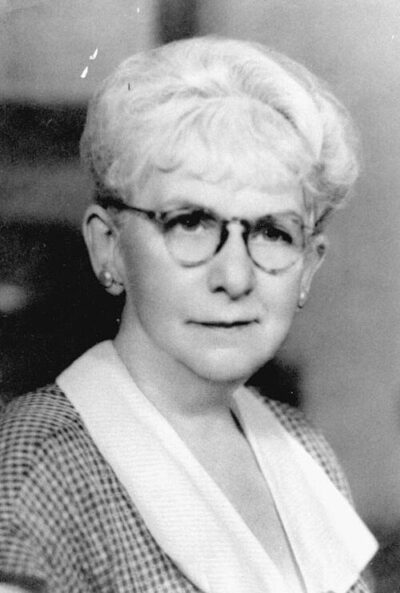
Marjory Stoneman Douglas
Marjory Stoneman Douglas was an American activist, journalist and writer. Born April 7, 1890, in Minneapolis. Died May 14, 1998, in Coconut Grove. Educated at Wellesley College. Awards include Presidential Medal of Freedom, National Women's Hall of Fame and Florida Women's Hall of Fame.
Facts
19 facts · 2 confirmed by two sources · 12 cited · 5 from one source
What’s different
- Died: we show May 14, 1998 (Confirmed). Wikidata also lists May 15, 1998
Where this comes from
Papalocal keeps its own record. It started from these sources; what each one said is kept here as it was copied, so a change on their side never changes this page by itself. Tap one to read its version.
What Wikidata says · copied November 16, 2026 · revision 2566753005
- Described as
- American activist, journalist and writer (1890–1998)
- Born
- April 7, 1890 · 4 references
- Died
- May 14, 1998 · 1 reference; May 15, 1998 · 1 reference
- Born in
- Minneapolis · 1 reference
- Died in
- Coconut Grove
- Cause of death
- disease
- Name at birth
- Marjory Stoneman
- Citizen of
- United States · 1 reference
- Occupation
- journalist · 1 reference; environmentalist · 1 reference; writer · 2 references; suffragist · 1 reference
- Education
- Wellesley College
- Member of
- National American Woman Suffrage Association · 1 reference
- Awards
- Presidential Medal of Freedom (1993) · 1 reference; National Women's Hall of Fame (2000) · 1 reference; Florida Women's Hall of Fame (1986) · 1 reference; Florida Artists Hall of Fame; honorary doctor of the University of Miami (1952) · 1 reference
- Father
- Frank Bryant Stoneman · 1 reference
- Wikipedias with a page
- 21
Wikidata item Q3293969 (wikidata.org/wiki/Q3293969), public domain (CC0). Copied November 16, 2026.
What Wikipedia says · copied November 16, 2026 · revision 1384384523
Marjory Stoneman Douglas (April 7, 1890 – May 14, 1998) was an American journalist, author, women's suffrage advocate, and conservationist known for her staunch defense of the Everglades against efforts to drain it and reclaim land for development. Moving to Miami as a young woman to work for The Miami Herald, she became a freelance writer, producing over one hundred short stories that were published in popular magazines. Her most influential work was the book The Everglades: River of Grass (1947), which redefined the popular conception of the Everglades as a treasured river instead of a worthless swamp. Its impact has been compared to that of Rachel Carson's influential book Silent Spring (1962). Her books, stories, and journalism career brought her influence in Miami, enabling her to advance her causes.
As a young woman, Douglas was outspoken and politically conscious of the women's suffrage and civil rights movements. She was called upon to take a central role in the protection of the Everglades when she was 79 years old. For the remaining 29 years of her life she was "a relentless reporter and fearless crusader" for the natural preservation and restoration of South Florida. Her tireless efforts earned her several variations of the nickname "Grande Dame of the Everglades" as well as the hostility of agricultural and business interests looking to benefit from land development in Florida. She received numerous awards, including the Presidential Medal of Freedom, and was inducted into several halls of fame.
Douglas lived to 108, working until nearly the end of her life for Everglades restoration. Upon her death, an obituary in The Independent in London stated, "In the history of the American environmental movement, there have been few more remarkable figures than Marjory Stoneman Douglas."
- Born, in its opening lines
- April 7, 1890
- Died, in its opening lines
- May 14, 1998
From the Wikipedia article “Marjory Stoneman Douglas” (en.wikipedia.org/wiki/Marjory_Stoneman_Douglas), by its contributors, under CC BY-SA 4.0 (creativecommons.org/licenses/by-sa/4.0/). Copied November 16, 2026; not changed.
Confirmed Two sources agree. Cited One source, and it names where it got it. One source One source, without a reference of its own. Sources disagree The sources disagree. We show the best-supported value and keep theirs below.
