
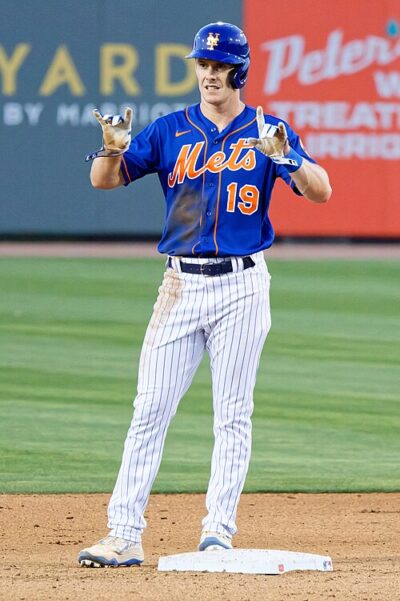
Mark Canha is an American baseball player. Born February 15, 1989, in San Jose. Teams include Athletics (2015–2021), California Golden Bears baseball and New York Mets (2022–2023). Educated at University of California, Berkeley and Bellarmine College Preparatory.
Facts
12 facts · 1 confirmed by two sources · 2 cited · 9 from one source
Where this comes from
Papalocal keeps its own record. It started from these sources; what each one said is kept here as it was copied, so a change on their side never changes this page by itself. Tap one to read its version.
What Wikidata says · copied November 20, 2026 · revision 2508177542
- Described as
- American baseball player
- Other names
- Mark David Canha
- Born
- February 15, 1989 · 1 reference
- Born in
- San Jose
- Citizen of
- United States
- Occupation
- baseball player · 1 reference
- Education
- University of California, Berkeley; Bellarmine College Preparatory · 1 reference
- Teams
- Athletics (2015–2021) · 1 reference; California Golden Bears baseball · 1 reference; New York Mets (2022–2023) · 1 reference; Milwaukee Brewers (2023) · 1 reference; Detroit Tigers (2024–) · 1 reference
- Sport
- baseball · 1 reference
- Wikipedias with a page
- 8
Wikidata item Q19795173 (wikidata.org/wiki/Q19795173), public domain (CC0). Copied November 20, 2026.
What Wikipedia says · copied November 20, 2026 · revision 1386544215
Mark David Canha (; born February 15, 1989) is an American professional baseball outfielder and first baseman who is a free agent. He has previously played in Major League Baseball (MLB) for the Oakland Athletics, New York Mets, Milwaukee Brewers, Detroit Tigers, San Francisco Giants, and Kansas City Royals. He made his MLB debut in 2015.
- Born, in its opening lines
- February 15, 1989
From the Wikipedia article “Mark Canha” (en.wikipedia.org/wiki/Mark_Canha), by its contributors, under CC BY-SA 4.0 (creativecommons.org/licenses/by-sa/4.0/). Copied November 20, 2026; not changed.
Confirmed Two sources agree. Cited One source, and it names where it got it. One source One source, without a reference of its own. Sources disagree The sources disagree. We show the best-supported value and keep theirs below.
