
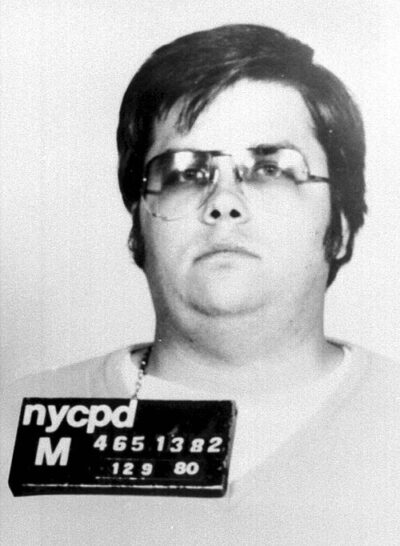
Mark David Chapman
Mark David Chapman is a John Lennon's killer. Born May 10, 1955, in Fort Worth. Educated at Covenant College and Columbia High School.
Facts
15 facts · 1 confirmed by two sources · 0 cited · 14 from one source
Where this comes from
Papalocal keeps its own record. It started from these sources; what each one said is kept here as it was copied, so a change on their side never changes this page by itself. Tap one to read its version.
What Wikipedia says · copied November 13, 2026 · revision 1384384559
Mark David Chapman (born May 10, 1955) is an American man who murdered English musician John Lennon in New York City on December 8, 1980. As Lennon walked into the archway of the Dakota, his apartment building on the Upper West Side, Chapman fired five shots at him from a few yards away with a Charter Arms Undercover .38 Special revolver; Lennon was hit four times from the back. He was rushed to Roosevelt Hospital and pronounced dead on arrival. Chapman remained at the scene following the shooting and made no attempt to flee or resist arrest. Instead, he sat reading The Catcher in the Rye to fulfill a personal parasocial fantasy.
Raised in Decatur, Georgia, Chapman was a fan of the Beatles but later grew infuriated by Lennon's lavish lifestyle, the lyrics of "God" and "Imagine", and public statements such as his remark about the band being "more popular than Jesus". The J. D. Salinger novel The Catcher in the Rye took on great personal significance for Chapman, to the extent that he wished to model his life after its protagonist, Holden Caulfield, and planned to cite it as his manifesto. Chapman also contemplated killing other public figures, including Paul McCartney and Ronald Reagan. He had no prior criminal convictions and had recently resigned from a job as a security guard in Hawaii.
Chapman's legal team initially intended to mount an insanity defense based on the testimony of mental health experts who said that he was in a delusional psychotic state at the time of the shooting. However, he was more cooperative with the prosecutor, who argued that his symptoms fell short of a schizophrenia diagnosis. As the trial approached, Chapman instructed his lawyers that he wanted to plead guilty to murder based on what he had decided was the will of God. The judge granted Chapman's request and deemed him competent to stand trial. He was sentenced to a prison term of 20 years to life with a stipulation that mental health treatment would be provided.
Chapman refused requests for press interviews during his first six years in prison; he later said that he regretted the murder and did not intend to seek fame and notoriety. He ultimately supplied audiotaped interviews to journalist Jack Jones, who used them to write the 1992 investigative book Let Me Take You Down: Inside the Mind of Mark David Chapman. In 2000, Chapman became eligible for parole, which has since been denied 14 times.
- Born, in its opening lines
- May 10, 1955
From the Wikipedia article “Mark David Chapman” (en.wikipedia.org/wiki/Mark_David_Chapman), by its contributors, under CC BY-SA 4.0 (creativecommons.org/licenses/by-sa/4.0/). Copied November 13, 2026; not changed.
What Wikidata says · copied November 14, 2026 · revision 2569098934
- Described as
- John Lennon's killer
- Other names
- Mark Chapman
- Born
- May 10, 1955 · 4 references
- Born in
- Fort Worth
- Citizen of
- United States
- Occupation
- inmate; murderer · 1 reference
- Education
- Covenant College; Columbia High School · 1 reference
- Member of
- World Alliance of YMCAs · 1 reference; World Vision International · 1 reference
- Spouse
- Gloria Chapman
- Mother
- Diane Elizabeth Pease
- Religion
- born again · 1 reference
- Lived in
- Fort Worth; Attica Correctional Facility; Wende Correctional Facility
- Wikipedias with a page
- 56
Wikidata item Q80462 (wikidata.org/wiki/Q80462), public domain (CC0). Copied November 14, 2026.
Confirmed Two sources agree. Cited One source, and it names where it got it. One source One source, without a reference of its own. Sources disagree The sources disagree. We show the best-supported value and keep theirs below.
