
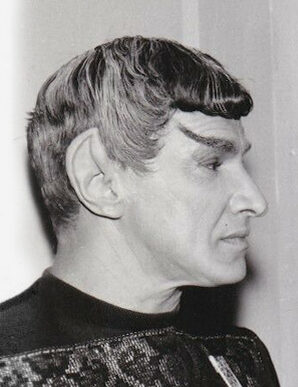
Mark Lenard
Mark Lenard was an American actor. Born October 15, 1924, in Chicago. Died November 22, 1996, in New York City. Educated at University of Michigan.
Facts
10 facts · 2 confirmed by two sources · 1 cited · 7 from one source
Where this comes from
Papalocal keeps its own record. It started from these sources; what each one said is kept here as it was copied, so a change on their side never changes this page by itself. Tap one to read its version.
What Wikidata says · copied November 16, 2026 · revision 2540287768
- Described as
- American actor (1924–1996)
- Other names
- Leonard Rosenson
- Born
- October 15, 1924 · 1 reference
- Died
- November 22, 1996 · 1 reference
- Born in
- Chicago
- Died in
- New York City
- Buried in
- Christ Church Churchyard · 1 reference
- Cause of death
- multiple myeloma
- Citizen of
- United States
- Occupation
- television actor; film actor
- Education
- University of Michigan
- Wikipedias with a page
- 20
Wikidata item Q940971 (wikidata.org/wiki/Q940971), public domain (CC0). Copied November 16, 2026.
What Wikipedia says · copied November 16, 2026 · revision 1383454412
Mark Lenard (born Leonard Rosenson, October 15, 1924 – November 22, 1996) was an American actor, primarily in television. His most famous role was that of Sarek, father of Spock, in the science fiction Star Trek franchise, both in Star Trek: The Original Series and the animated series, in three films, and in two episodes of Star Trek: The Next Generation. He also played a Klingon in Star Trek: The Motion Picture, and a Romulan Commander in the episode "Balance of Terror" of the original series.
- Born, in its opening lines
- October 15, 1924
- Died, in its opening lines
- November 22, 1996
From the Wikipedia article “Mark Lenard” (en.wikipedia.org/wiki/Mark_Lenard), by its contributors, under CC BY-SA 4.0 (creativecommons.org/licenses/by-sa/4.0/). Copied November 16, 2026; not changed.
Confirmed Two sources agree. Cited One source, and it names where it got it. One source One source, without a reference of its own. Sources disagree The sources disagree. We show the best-supported value and keep theirs below.
