
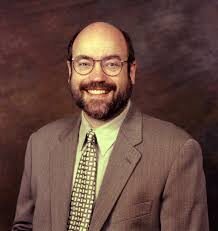
Mark Weiser
Mark Weiser was an American computer scientist. Born July 23, 1952, in Harvey. Died April 27, 1999. Educated at University of Michigan and New College of Florida.
Facts
15 facts · 2 confirmed by two sources · 4 cited · 9 from one source
Where this comes from
Papalocal keeps its own record. It started from these sources; what each one said is kept here as it was copied, so a change on their side never changes this page by itself. Tap one to read its version.
What Wikidata says · copied November 18, 2026 · revision 2569213469
- Described as
- American computer scientist (1952-1999)
- Other names
- Mark David Weiser, Mark D. Weiser
- Born
- July 23, 1952 · 1 reference
- Died
- April 27, 1999 · 1 reference
- Born in
- Harvey
- Citizen of
- United States
- Occupation
- computer scientist · 1 reference; university teacher; engineer
- Worked for
- University of Maryland; Palo Alto Research Center · 1 reference
- Education
- University of Michigan; New College of Florida (1970–)
- Member of
- Severe Tire Damage
- Field
- information technology · 1 reference; computing · 1 reference
- Siblings
- Ann Weiser Cornell
- Wikipedias with a page
- 17
Wikidata item Q62913 (wikidata.org/wiki/Q62913), public domain (CC0). Copied November 18, 2026.
What Wikipedia says · copied November 18, 2026 · revision 1380936259
Mark D. Weiser (July 23, 1952 – April 27, 1999) was an American computer scientist and chief technology officer (CTO) at Xerox PARC. Weiser is widely considered to be the father of ubiquitous computing, a term he coined in 1988. Within Silicon Valley, Weiser was broadly viewed as a visionary and computer pioneer, and his ideas have influenced many of the world's leading computer scientists.
- Born, in its opening lines
- July 23, 1952
- Died, in its opening lines
- April 27, 1999
From the Wikipedia article “Mark Weiser” (en.wikipedia.org/wiki/Mark_Weiser), by its contributors, under CC BY-SA 4.0 (creativecommons.org/licenses/by-sa/4.0/). Copied November 18, 2026; not changed.
Confirmed Two sources agree. Cited One source, and it names where it got it. One source One source, without a reference of its own. Sources disagree The sources disagree. We show the best-supported value and keep theirs below.
