
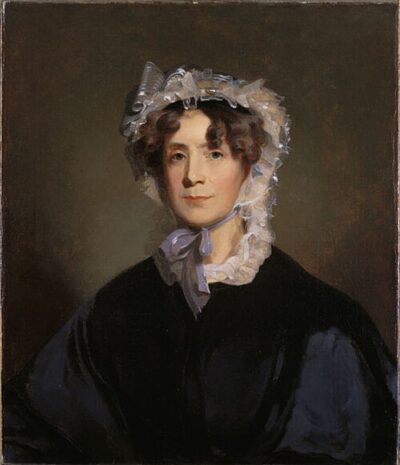
Martha Jefferson Randolph
Martha Jefferson Randolph was a First Lady of the United States from 1801 to 1809. Born September 27, 1772, in Monticello. Died October 10, 1836, in Albemarle County. Positions held include First Lady of the United States (1801–1809) and First Lady of Virginia.
Facts
29 facts · 2 confirmed by two sources · 5 cited · 22 from one source
Where this comes from
Papalocal keeps its own record. It started from these sources; what each one said is kept here as it was copied, so a change on their side never changes this page by itself. Tap one to read its version.
What Wikidata says · copied November 14, 2026 · revision 2567825985
- Described as
- First Lady of the United States from 1801 to 1809
- Other names
- Martha Jefferson
- Born
- September 27, 1772 · 4 references
- Died
- October 10, 1836 · 4 references
- Born in
- Monticello · 1 reference
- Died in
- Albemarle County · 1 reference
- Buried in
- Monticello Graveyard
- Citizen of
- United States
- Occupation
- politician
- Positions held
- First Lady of the United States (1801–1809); First Lady of Virginia
- Spouse
- Thomas Mann Randolph (1790–) · 2 references
- Children
- Thomas Jefferson Randolph; George Wythe Randolph · 1 reference; Virginia Jefferson Randolph Trist · 1 reference; Anne Cary Randolph Bankhead · 1 reference; Septimia Randolph Meikleham · 1 reference; Benjamin Franklin Randolph · 1 reference; Meriwether Lewis Randolph · 1 reference; Cornelia J. Randolph · 1 reference; Ellen Wayles Randolph · 1 reference; Mary Jefferson Randolph · 1 reference; James Madison Randolph · 1 reference; Eleonora Wayles Randolph
- Father
- Thomas Jefferson · 1 reference
- Mother
- Martha Jefferson · 1 reference
- Siblings
- Madison Hemings; Mary Jefferson Eppes; Harriet Hemings; Eston Hemings
- Religion
- Christianity
- Wikipedias with a page
- 40
Wikidata item Q255159 (wikidata.org/wiki/Q255159), public domain (CC0). Copied November 14, 2026.
What Wikipedia says · copied November 14, 2026 · revision 1382359294
Martha "Patsy" Randolph (née Jefferson; September 27, 1772 – October 10, 1836) was the eldest daughter of Thomas Jefferson (the third president of the United States) and his wife, Martha Wayles Skelton Jefferson. She was born at Monticello, near Charlottesville, Virginia.
Randolph's mother died when she was nearly 10 years old, when only two out of her five siblings were alive. Her father saw that she had a good education. She spoke four languages and was greatly influenced by the education she received in a Paris convent school with daughters of the French elite. By 1804, she was the lone surviving child of Martha and Thomas Jefferson, the only one of the couple's children to survive past the age of 25.
Martha Jefferson married Thomas Mann Randolph Jr., who was a politician at the federal and state levels and was elected as governor of Virginia (1819–1822), which made her the first lady of Virginia. They had twelve children together.
Randolph oversaw the operation of Varina and Edge Hill with her husband, and Monticello with her father. She was in regular correspondence with her father when they were not together. She provided emotional stability for Jefferson, which helped him weather his tumultuous political career. Besides overseeing Monticello, she lived with Jefferson at the White House, serving as an informal First Lady.
After the White House, Randolph and her children lived at Monticello and cared for her father. Due to debt, the Randolphs sold Varina and lost Edge Hill plantation to foreclosure in 1825. Randolph inherited Monticello and Jefferson's debts when her father died in 1826. Many of the enslaved people at Monticello were sold to cover some of the debt.
- Born, in its opening lines
- September 27, 1772
- Died, in its opening lines
- October 10, 1836
From the Wikipedia article “Martha Jefferson Randolph” (en.wikipedia.org/wiki/Martha_Jefferson_Randolph), by its contributors, under CC BY-SA 4.0 (creativecommons.org/licenses/by-sa/4.0/). Copied November 14, 2026; not changed.
Confirmed Two sources agree. Cited One source, and it names where it got it. One source One source, without a reference of its own. Sources disagree The sources disagree. We show the best-supported value and keep theirs below.
