
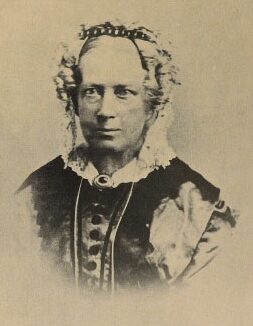
Mary Carpenter
Mary Carpenter was an English educationist and social reformer. Born April 3, 1807, in Exeter. Died June 14, 1877, in Bristol. Known for Visits to the Irish Convict Prisons.
Facts
15 facts · 2 confirmed by two sources · 0 cited · 13 from one source
Where this comes from
Papalocal keeps its own record. It started from these sources; what each one said is kept here as it was copied, so a change on their side never changes this page by itself. Tap one to read its version.
What Wikidata says · copied November 18, 2026 · revision 2557074676
- Described as
- English educationist and social reformer (1807–1877)
- Born
- April 3, 1807 · 5 references
- Died
- June 14, 1877 · 5 references
- Born in
- Exeter
- Died in
- Bristol
- Buried in
- Arnos Vale Cemetery
- Citizen of
- United Kingdom of Great Britain and Ireland · 2 references
- Occupation
- writer; philanthropist · 1 reference; teacher · 1 reference; public figure · 1 reference
- Known for
- Visits to the Irish Convict Prisons
- Father
- Lant Carpenter
- Siblings
- William Benjamin Carpenter; Philip Pearsall Carpenter; Russell Lant Carpenter
- Wikipedias with a page
- 20
Wikidata item Q4942057 (wikidata.org/wiki/Q4942057), public domain (CC0). Copied November 18, 2026.
What Wikipedia says · copied November 18, 2026 · revision 1372769591
Mary Carpenter (3 April 1807 – 14 June 1877) was an English educational and social reformer. The daughter of a Unitarian minister, she founded a ragged school and reformatories, bringing previously unavailable educational opportunities to poor children and young offenders in Bristol.
She published articles and books on her work and her lobbying played a role in the passage of several educational acts in the mid-nineteenth century. She was also the first woman to have a paper published by the Statistical Society of London. She addressed many conferences and meetings and became known as one of the foremost public speakers of her time. Carpenter was active in the anti-slavery movement; she also visited India, visiting schools and prisons and working to improve female education, establish reformatory schools and improve prison conditions. In later years she visited Europe and America, carrying on her campaigns of penal and educational reform.
Carpenter publicly supported women's suffrage in her later years and also campaigned for female access to higher education. She is buried in Arnos Vale Cemetery in Bristol and has a memorial in the North transept of Bristol Cathedral.
- Born, in its opening lines
- April 3, 1807
- Died, in its opening lines
- June 14, 1877
From the Wikipedia article “Mary Carpenter” (en.wikipedia.org/wiki/Mary_Carpenter), by its contributors, under CC BY-SA 4.0 (creativecommons.org/licenses/by-sa/4.0/). Copied November 18, 2026; not changed.
Confirmed Two sources agree. Cited One source, and it names where it got it. One source One source, without a reference of its own. Sources disagree The sources disagree. We show the best-supported value and keep theirs below.
