
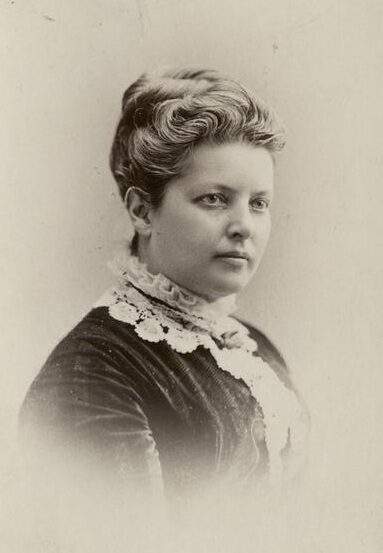
Mary Mapes Dodge
Mary Mapes Dodge was an American children's writer. Born January 26, 1831, in New York City. Died August 21, 1905, in New York City. Known for Hans Brinker, or The Silver Skates. Awards include Montyon Prize.
Facts
16 facts · 2 confirmed by two sources · 4 cited · 10 from one source
Where this comes from
Papalocal keeps its own record. It started from these sources; what each one said is kept here as it was copied, so a change on their side never changes this page by itself. Tap one to read its version.
What Wikidata says · copied November 15, 2026 · revision 2567394227
- Described as
- American children's writer (1831-1905)
- Other names
- Mary Elizabeth Mapes Dodge, Mary Dodge, Gail Hamilton, Mary Elizabeth Mapes, Mary Elizabeth Dodge, M. E. Dodge
- Born
- January 26, 1831 · 4 references
- Died
- August 21, 1905 · 5 references
- Born in
- New York City · 1 reference
- Died in
- New York City
- Buried in
- Evergreen Cemetery
- Name at birth
- Mary Elizabeth Mapes
- Citizen of
- United States · 1 reference
- Occupation
- writer · 3 references; novelist; children's writer · 1 reference; editor · 1 reference; poet
- Known for
- Hans Brinker, or The Silver Skates · 1 reference
- Awards
- Montyon Prize (1876)
- Children
- James Mapes Dodge · 1 reference
- Father
- James Mapes
- Wikipedias with a page
- 33
Wikidata item Q2518093 (wikidata.org/wiki/Q2518093), public domain (CC0). Copied November 15, 2026.
What Wikipedia says · copied November 15, 2026 · revision 1371369819
Mary Elizabeth Mapes Dodge (January 26, 1831 – August 21, 1905) was an American children's author and editor, best known for her novel Hans Brinker. She was the recognized leader in juvenile literature for almost a third of the nineteenth century.
Dodge conducted St. Nicholas Magazine for more than 30 years, and it became one of the most successful magazines for children.
She was able to persuade many of the great writers of the world to contribute to her children's magazine – Mark Twain, Louisa May Alcott, Robert Louis Stevenson, Alfred, Lord Tennyson, Henry Wadsworth Longfellow, William Cullen Bryant, Oliver Wendell Holmes Sr., Bret Harte, John Hay, Charles Dudley Warner, Elizabeth Stuart Phelps Ward, and scores of others. One day, Rudyard Kipling told her a story of the Indian jungle; Dodge asked him to write it down for St. Nicholas. He never had written for children, but he would try. The result was The Jungle Book.
After the death of her husband, Dodge turned to literature as a means to earn the money to educate her sons. She began to write short sketches for children, and soon brought out a volume of them, entitled Irvington Stories, (New York, 1864), which was very successful. She next published Hans Brinker, or The Silver Skates (New York, 1865); translated into Dutch, French, German, Russian and Italian, and was awarded a prize of 1,500 francs by the French Academy. With Donald Grant Mitchell and Harriet Beecher Stowe, Dodge was one of the earliest editors of Hearth and Home, and for several years, she conducted the household and children's department of that journal. In 1873, when St. Nicholas Magazine was started, she became its editor. Her other published volumes were A Few Friends, and How They Amused Themselves (Philadelphia, 1860), Rhymes and Jingles (New York, 1874), Theophilus and Others (New York, 1876) Along the Way, poems (New York, 1879), and Donald and Dorothy (New York, 1883). She was the author of "Miss Maloney on the Chinese Question," published in Scribner's Monthly in 1870. Dodge contributed to Harper's Magazine, Atlantic Monthly, the Centur, and other periodicals.
- Born, in its opening lines
- January 26, 1831
- Died, in its opening lines
- August 21, 1905
From the Wikipedia article “Mary Mapes Dodge” (en.wikipedia.org/wiki/Mary_Mapes_Dodge), by its contributors, under CC BY-SA 4.0 (creativecommons.org/licenses/by-sa/4.0/). Copied November 15, 2026; not changed.
Confirmed Two sources agree. Cited One source, and it names where it got it. One source One source, without a reference of its own. Sources disagree The sources disagree. We show the best-supported value and keep theirs below.
