
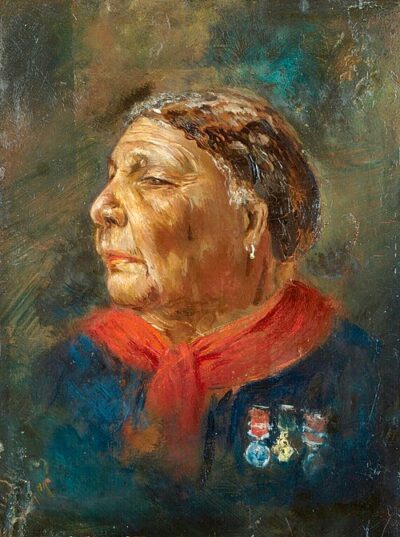
Mary Seacole was a British-Jamaican businesswoman and nurse. Born 1805, in Kingston. Died May 14, 1881, in London.
Facts
12 facts · 2 confirmed by two sources · 10 cited · 0 from one source
Where this comes from
Papalocal keeps its own record. It started from these sources; what each one said is kept here as it was copied, so a change on their side never changes this page by itself. Tap one to read its version.
What Wikidata says · copied November 16, 2026 · revision 2568188687
- Described as
- British-Jamaican businesswoman and nurse
- Other names
- Mary Jane Grant, Mary Jane Seacole, Mrs. Seacole
- Born
- 1805 · 13 references
- Died
- May 14, 1881 · 4 references
- Born in
- Kingston · 2 references
- Died in
- London · 1 reference
- Buried in
- St Mary's Catholic Cemetery, Kensal Green · 1 reference
- Citizen of
- United Kingdom of Great Britain and Ireland · 1 reference
- Occupation
- nurse · 1 reference; autobiographer · 2 references; writer · 1 reference; traditional healer · 1 reference
- Field
- nurse · 1 reference
- Spouse
- Edwin Horatio Hamilton Seacole · 1 reference
- Wikipedias with a page
- 41
Wikidata item Q963703 (wikidata.org/wiki/Q963703), public domain (CC0). Copied November 16, 2026.
What Wikipedia says · copied November 16, 2026 · revision 1383133086
Mary Jane Seacole (née Grant; 23 November 1805 – 14 May 1881) was a Jamaican nurse and businesswoman. She was famous for her nursing work during the Crimean War and for publishing the first autobiography written by a woman of African descent in Britain.
Seacole was born in Kingston, Jamaica, to a Creole mother who ran a boarding house and had herbalist skills as a "doctress". In 1990, Seacole was (posthumously) awarded the Jamaican Order of Merit. In 2004, she was voted the greatest Black Briton in a survey conducted in 2003 by the black heritage website Every Generation.
Seacole went to the Crimean War in 1855 with the plan of setting up the "British Hotel", as "a mess-table and comfortable quarters for sick and convalescent officers". However, chef Alexis Soyer told her that officers did not need overnight accommodation, so she instead made it into a restaurant/bar/catering service. It proved to be very popular and she and her business partner, a relative of her late husband, did well on it until the end of the war. Her 1857 memoir, Adventures of Mrs Seacole in Many Lands, includes three chapters of the food she served and the encounters she had with officers, some of them high-ranking, and including the commander of the Turkish forces.
Seacole missed the first three major battles of the war, as she was busy in London attending to her gold investments—she had arrived from Panama, where she had provided services for prospectors going overland to and from the California Gold Rush. She gave assistance at the battlefield on three later battles, going out to attend to the fallen after serving wine and sandwiches to spectators.
In her memoir, Seacole described several attempts she made to join that team; however, she did not start her informal inquiries until after both Florence Nightingale and her initial team, and a later one, had left. When Seacole left, it was with the plan of joining her business partner and starting their business. She travelled with two Black employees, her maid Mary, and a porter, Mac.
She was largely forgotten for almost a century after her death. Her autobiography, Wonderful Adventures of Mrs. Seacole in Many Lands (1857), was the first autobiography written by a Black woman in Britain. The erection of a statue of Seacole at St Thomas' Hospital, London, on 30 June 2016, describing her as a "pioneer", generated some controversy and opposition, especially among those concerned with Nightingale's legacy.
- Born, in its opening lines
- November 23, 1805
- Died, in its opening lines
- May 14, 1881
From the Wikipedia article “Mary Seacole” (en.wikipedia.org/wiki/Mary_Seacole), by its contributors, under CC BY-SA 4.0 (creativecommons.org/licenses/by-sa/4.0/). Copied November 16, 2026; not changed.
Confirmed Two sources agree. Cited One source, and it names where it got it. One source One source, without a reference of its own. Sources disagree The sources disagree. We show the best-supported value and keep theirs below.
