
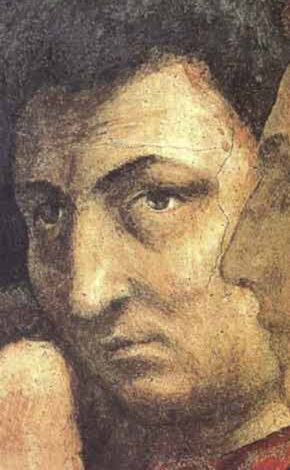
Masaccio
Masaccio was an Italian painter. Born December 21, 1401, in San Giovanni Valdarno. Died 1428, in Rome. Known for Virgin and Child with Saint Anne, Madonna and Child and Holy Trinity.
Facts
10 facts · 0 confirmed by two sources · 5 cited · 5 from one source
Where this comes from
Papalocal keeps its own record. It started from these sources; what each one said is kept here as it was copied, so a change on their side never changes this page by itself. Tap one to read its version.
What Wikidata says · copied November 16, 2026 · revision 2569715015
- Described as
- Italian painter (1401-1428)
- Other names
- Tommaso di Ser Giovanni di Simone, Mazachcho, Mazzacio, Tommaso di Ser Giovanni di Mone Cassai, Massacio, Tommaso Di Giovanni Di Simone Guidi Masaccio, Tommaso di ser Giovanni di Mone Guidi, Tommaso Guidi Masaccio, Mesaccio, Tommaso di Giovanni di Simone Guidi, Massaccio, Tommaso Guidi
- Born
- December 21, 1401 · 4 references
- Died
- 1428 · 26 references
- Born in
- San Giovanni Valdarno
- Died in
- Rome · 2 references
- Occupation
- painter · 3 references
- Known for
- Virgin and Child with Saint Anne; Madonna and Child; Holy Trinity
- Field
- painting
- Siblings
- Giovanni di ser Giovanni Guidi · 1 reference
- Wikipedias with a page
- 80
Wikidata item Q5811 (wikidata.org/wiki/Q5811), public domain (CC0). Copied November 16, 2026.
What Wikipedia says · copied November 16, 2026 · revision 1385063428
Tommaso di Ser Giovanni di Simone Cassai (December 21, 1401 – summer 1428), known as Masaccio (UK: , US: ; Italian: [maˈzattʃo]), was a Florentine artist who is regarded as the first great Italian painter of the Quattrocento period of the Italian Renaissance. According to Vasari, Masaccio was the best painter of his generation because of his skill at imitating nature, recreating lifelike figures and movements as well as a convincing sense of three-dimensionality. He employed nudes and foreshortenings in his figures. This had seldom been done before him.
The name Masaccio is a humorous version of Maso (short for Tommaso), meaning "clumsy" or "messy" Tom. The name may have been created to distinguish him from his principal collaborator, also called Maso, who came to be known as Masolino ("little/delicate Tom").
Despite his brief career, he had a profound influence on other artists and is considered to have started the Early Italian Renaissance in painting with his works in the mid- and late-1420s. He was one of the first to use linear perspective in his painting, employing techniques such as vanishing point in art for the first time. He moved away from the International Gothic style and elaborate ornamentation of artists like Gentile da Fabriano to a more naturalistic mode that employed perspective and chiaroscuro for greater realism.
Masaccio died at the age of twenty-six and little is known about the exact circumstances of his death. Upon hearing of Masaccio's death, Filippo Brunelleschi said: "We have suffered a great loss."
From the Wikipedia article “Masaccio” (en.wikipedia.org/wiki/Masaccio), by its contributors, under CC BY-SA 4.0 (creativecommons.org/licenses/by-sa/4.0/). Copied November 16, 2026; not changed.
Confirmed Two sources agree. Cited One source, and it names where it got it. One source One source, without a reference of its own. Sources disagree The sources disagree. We show the best-supported value and keep theirs below.
