
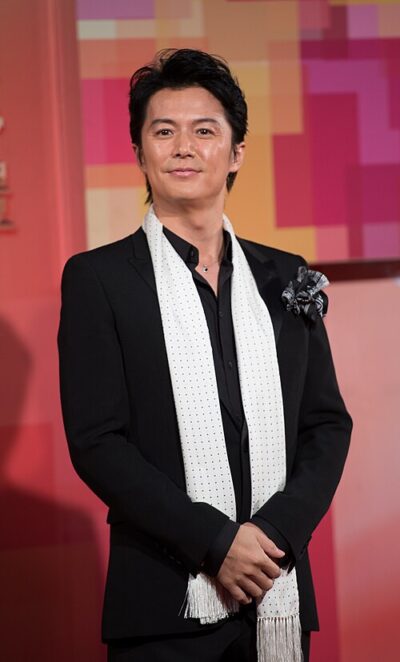
Masaharu Fukuyama
Masaharu Fukuyama is a Japanese singer-songwriter and actor. Born February 6, 1969, in Nagasaki. Known for Hello, Heaven/Squall and Kazoku ni Narō yo. Educated at Nagasaki Prefectural Nagasaki Technical High School. Awards include Japan Academy Film Prize.
Facts
25 facts · 1 confirmed by two sources · 1 cited · 23 from one source
Where this comes from
Papalocal keeps its own record. It started from these sources; what each one said is kept here as it was copied, so a change on their side never changes this page by itself. Tap one to read its version.
What Wikidata says · copied November 17, 2026 · revision 2567799191
- Described as
- Japanese singer-songwriter and actor
- Other names
- Fukuyama Masaharu
- Born
- February 6, 1969
- Born in
- Nagasaki · 1 reference
- Citizen of
- Japan
- Occupation
- singer-songwriter; actor · 1 reference; singer; record producer; composer; lyricist; photographer; guitarist · 1 reference
- Education
- Nagasaki Prefectural Nagasaki Technical High School
- Member of
- KOH+
- Genre
- J-pop
- Instrument
- guitar; voice
- Record label
- BMG Japan; Bertelsmann Music Group
- Known for
- Hello; Heaven/Squall; Kazoku ni Narō yo
- Awards
- Japan Academy Film Prize (2013)
- Spouse
- Kazue Fukiishi
- Height
- 1.81 m (5 ft 11 in)
- Website
- http://www.fukuyamamasaharu.com/
- Wikipedias with a page
- 28
Wikidata item Q1141809 (wikidata.org/wiki/Q1141809), public domain (CC0). Copied November 17, 2026.
What Wikipedia says · copied November 17, 2026 · revision 1375549870
Masaharu Fukuyama (福山 雅治, Fukuyama Masaharu; born February 6, 1969) is a Japanese singer-songwriter and actor from Nagasaki. He debuted in 1990 with the single "Tsuioku no Ame no Naka".
Fukuyama is represented by the agency Amuse, Inc.
- Born, in its opening lines
- February 6, 1969
From the Wikipedia article “Masaharu Fukuyama” (en.wikipedia.org/wiki/Masaharu_Fukuyama), by its contributors, under CC BY-SA 4.0 (creativecommons.org/licenses/by-sa/4.0/). Copied November 17, 2026; not changed.
Confirmed Two sources agree. Cited One source, and it names where it got it. One source One source, without a reference of its own. Sources disagree The sources disagree. We show the best-supported value and keep theirs below.
