
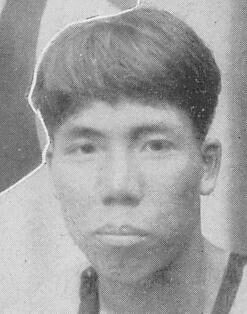
Masaji Kiyokawa
Masaji Kiyokawa was a swimmer. Born February 11, 1913, in Toyohashi. Died April 13, 1999, in Tokyo. Educated at Hitotsubashi University. Awards include Order of the Sacred Treasure, 2nd Class, Silver Olympic Order and Asahi Prize.
Facts
14 facts · 2 confirmed by two sources · 0 cited · 12 from one source
Where this comes from
Papalocal keeps its own record. It started from these sources; what each one said is kept here as it was copied, so a change on their side never changes this page by itself. Tap one to read its version.
What Wikidata says · copied November 18, 2026 · revision 2553677934
- Described as
- swimmer (1913-1999)
- Born
- February 11, 1913
- Died
- April 13, 1999
- Born in
- Toyohashi
- Died in
- Tokyo · 1 reference
- Cause of death
- pancreatic cancer
- Citizen of
- Japan; Empire of Japan (–1947)
- Occupation
- swimmer
- Education
- Hitotsubashi University
- Member of
- International Olympic Committee
- Sport
- competitive swimming · 1 reference
- Awards
- Order of the Sacred Treasure, 2nd Class (1984); Silver Olympic Order (1989); Asahi Prize (1990)
- Wikipedias with a page
- 21
Wikidata item Q1379940 (wikidata.org/wiki/Q1379940), public domain (CC0). Copied November 18, 2026.
What Wikipedia says · copied November 18, 2026 · revision 1363248198
Masaji Kiyokawa (清川 正二, Kiyokawa Masaji; February 11, 1913 – April 13, 1999) was a Japanese businessman, sports administrator and backstroke swimmer who won two medals at the 1932 and 1936 Olympics. During his swimming career Kiyokawa set one world record, in the 400-metre backstroke.
Kiyokawa was born in Toyohashi, Aichi Prefecture, and graduated from the Tokyo College of Commerce (now Hitotsubashi University). Selected as a member of the Japanese swimming team at the 1932 Los Angeles Olympics, he won the gold medal in the 100 m backstroke event, with teammates Toshio Irie and Kentaro Kawatsu taking the silver and bronze. At the 1936 Berlin Olympics, he placed third in the same event.
In 1948, Kiyokawa became a director of the Japan Swimming Federation, and a member of the International Olympic Committee from 1975 to 1989, serving as vice chairman from 1979 to 1983. During his tenure, the city of Nagoya made a bid for the 1988 Summer Olympics, competing against Seoul, South Korea. Kiyokawa was critical of the large amounts of money being spent by both parties to entertain and influence the votes of the IOC members. He was also critical of the decision of the Japanese government to bow to political pressure from the United States to boycott the 1980 Summer Olympics in Moscow.
Kiyokawa was the CEO of the general trading company Kanematsu Corp. from 1976. He died of pancreatic cancer on April 13, 1999.
- Born, in its opening lines
- February 11, 1913
- Died, in its opening lines
- April 13, 1999
From the Wikipedia article “Masaji Kiyokawa” (en.wikipedia.org/wiki/Masaji_Kiyokawa), by its contributors, under CC BY-SA 4.0 (creativecommons.org/licenses/by-sa/4.0/). Copied November 18, 2026; not changed.
Confirmed Two sources agree. Cited One source, and it names where it got it. One source One source, without a reference of its own. Sources disagree The sources disagree. We show the best-supported value and keep theirs below.
