
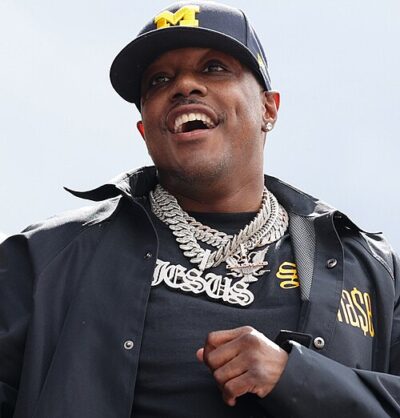
Mase
Mase is an American rapper. Born August 27, 1975, in Jacksonville. Positions held include minister. Educated at State University of New York at Purchase and Clark Atlanta University.
Facts
17 facts · 1 confirmed by two sources · 2 cited · 14 from one source
Where this comes from
Papalocal keeps its own record. It started from these sources; what each one said is kept here as it was copied, so a change on their side never changes this page by itself. Tap one to read its version.
What Wikidata says · copied November 15, 2026 · revision 2568866228
- Described as
- American rapper (born 1975)
- Other names
- Ma$e, Mason Betha, Murda Mase
- Born
- August 27, 1975
- Born in
- Jacksonville
- Name at birth
- Mason Durell Betha
- Citizen of
- United States
- Occupation
- rapper · 1 reference; songwriter; musician · 1 reference
- Positions held
- minister
- Education
- State University of New York at Purchase; Clark Atlanta University; Manhattan Center for Science and Mathematics · 1 reference
- Member of
- Puff Daddy & The Diddymen Family
- Genre
- hip-hop; East Coast hip-hop; Christian hip-hop
- Instrument
- voice
- Record label
- Bad Boy Records
- Wikipedias with a page
- 25
Wikidata item Q126927 (wikidata.org/wiki/Q126927), public domain (CC0). Copied November 15, 2026.
What Wikipedia says · copied November 15, 2026 · revision 1379990951
Mason Durell Betha (born August 27, 1975), known professionally as Mase (often stylized as Ma$e), is an American rapper. Best known for his work with Sean "Puff Daddy" Combs's Bad Boy Records, he signed with the label in 1996 and quickly found mainstream recognition as Combs's hype man. He guest appeared on Combs's 1997 single "Can't Nobody Hold Me Down", which peaked atop the Billboard Hot 100, while his first two singles as a lead artist, "Feel So Good" (featuring Kelly Price) and "What You Want" (featuring Total), both peaked in the chart's top ten. Released in October of that year, his debut studio album, Harlem World (1997), peaked atop the Billboard 200 chart, was certified quadruple platinum by the Recording Industry Association of America (RIAA), and spawned his third top-ten single as a lead artist, "Lookin' at Me" (featuring Combs). His guest performances on labelmate the Notorious B.I.G.'s single "Mo Money Mo Problems" and Combs's "Been Around the World" peaked at numbers one and two on the Billboard Hot 100, respectively, that same year.
Mase also performed as part of the hip hop group Children of the Corn, which he formed in 1993 with fellow New York City-based rappers including Cam'ron and Big L. Two years later, he founded the hip hop group Harlem World, which signed with Jermaine Dupri's So So Def Recordings. The group's only album, The Movement (1999), and Mase's second album, Double Up (1999), both peaked at number 11 on the Billboard 200. The latter preceded a five-year recording hiatus, during which Mase began a separate career as a Christian pastor. He returned to recording with his third album, Welcome Back (2004). It peaked at number four on the chart and spawned the top 40 singles "Welcome Back" and "Breathe, Stretch, Shake" (featuring Puff Daddy).
Despite receiving gold certifications from the RIAA, both albums were met with mixed critical reception and he parted ways with Bad Boy after the latter; his subsequent releases have been few and far between, and each has failed to chart. Mase has founded the record label RichFish Records, through which he signed rapper Fivio Foreign in 2019. During Combs's sexual misconduct allegations and criminal trials from 2024 to 2025, Mase spoke of his previous falling out and dissociation with Combs due to suspected concerns, calling Combs's legal woes "payback".
- Born, in its opening lines
- August 27, 1975
From the Wikipedia article “Mase” (en.wikipedia.org/wiki/Mase), by its contributors, under CC BY-SA 4.0 (creativecommons.org/licenses/by-sa/4.0/). Copied November 15, 2026; not changed.
Confirmed Two sources agree. Cited One source, and it names where it got it. One source One source, without a reference of its own. Sources disagree The sources disagree. We show the best-supported value and keep theirs below.
