
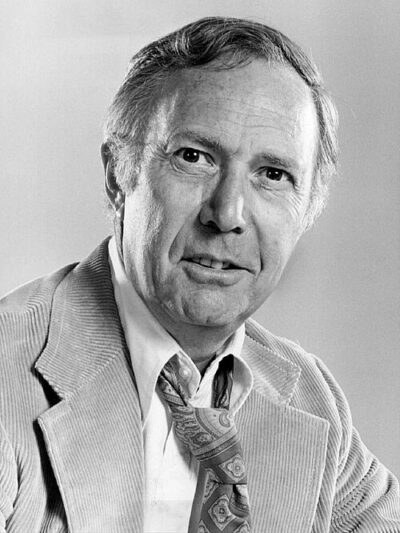
Mason Adams
Mason Adams was an American actor. Born February 26, 1919, in Brooklyn. Died April 26, 2005, in Manhattan. Educated at University of Wisconsin–Madison and University of Michigan.
Facts
12 facts · 2 confirmed by two sources · 0 cited · 10 from one source
Where this comes from
Papalocal keeps its own record. It started from these sources; what each one said is kept here as it was copied, so a change on their side never changes this page by itself. Tap one to read its version.
What Wikidata says · copied November 18, 2026 · revision 2541539927
- Described as
- American actor (1919–2005)
- Born
- February 26, 1919 · 2 references
- Died
- April 26, 2005 · 2 references
- Born in
- Brooklyn
- Died in
- Manhattan
- Citizen of
- United States
- Occupation
- actor; television actor; film actor; radio personality · 1 reference
- Education
- University of Wisconsin–Madison; University of Michigan
- Field
- voice actor · 1 reference
- Wikipedias with a page
- 19
Wikidata item Q321990 (wikidata.org/wiki/Q321990), public domain (CC0). Copied November 18, 2026.
What Wikipedia says · copied November 18, 2026 · revision 1349717965
Mason Adams (born Mason Abrams; February 26, 1919 – April 26, 2005) was an American actor. From the late 1940s until the early 1970s, he was heard in numerous radio programs and voiceovers for countless television commercials, the latter of which he resumed in the 1980s and 1990s. In the early 1970s, he moved into acting and from 1977 to 1983 held perhaps his best-known role, that of Managing Editor Charlie Hume on Lou Grant. He also acted in numerous other television and movie roles, most prominently Omen III: The Final Conflict (1981) and F/X (1986).
- Born, in its opening lines
- February 26, 1919
- Died, in its opening lines
- April 26, 2005
From the Wikipedia article “Mason Adams” (en.wikipedia.org/wiki/Mason_Adams), by its contributors, under CC BY-SA 4.0 (creativecommons.org/licenses/by-sa/4.0/). Copied November 18, 2026; not changed.
Confirmed Two sources agree. Cited One source, and it names where it got it. One source One source, without a reference of its own. Sources disagree The sources disagree. We show the best-supported value and keep theirs below.
