
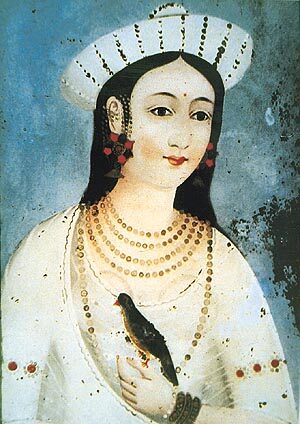
Mastani was a Second wife of Bajirao I. Born August 29, 1699, in Bundelkhand. Died April 28, 1740, in Pabal.
Facts
9 facts · 2 confirmed by two sources · 0 cited · 7 from one source
Where this comes from
Papalocal keeps its own record. It started from these sources; what each one said is kept here as it was copied, so a change on their side never changes this page by itself. Tap one to read its version.
What Wikidata says · copied November 18, 2026 · revision 2340718461
- Described as
- Second wife of Bajirao I
- Born
- August 29, 1699
- Died
- April 28, 1740
- Born in
- Bundelkhand
- Died in
- Pabal
- Occupation
- aristocrat
- Spouse
- Baji Rao I
- Children
- Shamsher Bahadur I
- Father
- Chhatrasal
- Religion
- Islam
- Wikipedias with a page
- 24
Wikidata item Q3785174 (wikidata.org/wiki/Q3785174), public domain (CC0). Copied November 18, 2026.
What Wikipedia says · copied November 18, 2026 · revision 1375249486
Mastani (29 August 1699 – 28 April 1740) was the daughter of Maharaja Chhatrasal Bundela of Bundelkhand. She was the second wife of the Maratha Peshwa (Prime Minister) Baji Rao I. The marriage was arranged to promote diplomatic ties with the Maratha Empire. Her relationship within the Maratha Brahmin family has been subject of both admiration and controversy and well adapted in Indian novels and cinema.
- Born, in its opening lines
- August 29, 1699
- Died, in its opening lines
- April 28, 1740
From the Wikipedia article “Mastani” (en.wikipedia.org/wiki/Mastani), by its contributors, under CC BY-SA 4.0 (creativecommons.org/licenses/by-sa/4.0/). Copied November 18, 2026; not changed.
Confirmed Two sources agree. Cited One source, and it names where it got it. One source One source, without a reference of its own. Sources disagree The sources disagree. We show the best-supported value and keep theirs below.
