
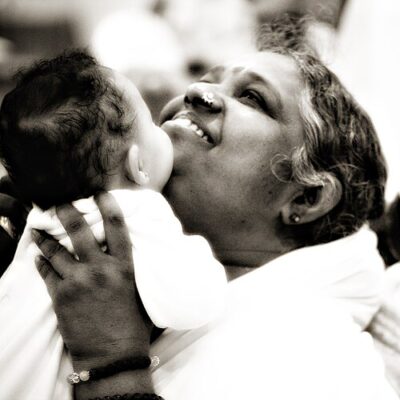
Mata Amritanandamayi
Mata Amritanandamayi is an Indian spiritual leader and guru. Born September 27, 1953, in Amritapuri. Positions held include chancellor (2003–). Awards include James Parks Morton Interfaith Award.
Facts
12 facts · 1 confirmed by two sources · 1 cited · 10 from one source
Where this comes from
Papalocal keeps its own record. It started from these sources; what each one said is kept here as it was copied, so a change on their side never changes this page by itself. Tap one to read its version.
What Wikidata says · copied November 16, 2026 · revision 2568914235
- Described as
- Indian spiritual leader and guru
- Other names
- Amritanandamayi, Mata Amritanandamayi devi
- Born
- September 27, 1953 · 1 reference
- Born in
- Amritapuri
- Citizen of
- India
- Occupation
- guru; religious leader; leader; cleric · 1 reference
- Positions held
- chancellor (2003–)
- Awards
- James Parks Morton Interfaith Award
- Religion
- Hinduism
- Website
- https://www.embracingtheworld.org/; https://www.amma.org
- Wikipedias with a page
- 42
Wikidata item Q465072 (wikidata.org/wiki/Q465072), public domain (CC0). Copied November 16, 2026.
What Wikipedia says · copied November 16, 2026 · revision 1385867853
Sri Mātā Amritānandamayī Devi (born Sudhamani Idamannel; 27 September 1953), often known as Amma ("Mother"), is an Indian Hindu spiritual leader, godwoman, guru and humanitarian. She is the chancellor of Amrita Vishwa Vidyapeetham, a multi-campus research university.
In 2018, she was felicitated by Indian Prime Minister Narendra Modi for making the largest contribution to the Government of India's Clean India Campaign Swachh Bharat Mission. She was the first recipient of Vishwaratna Puraskar (Gem of the World Award) by Hindu Parliament.
- Born, in its opening lines
- September 27, 1953
From the Wikipedia article “Mata Amritanandamayi” (en.wikipedia.org/wiki/Mata_Amritanandamayi), by its contributors, under CC BY-SA 4.0 (creativecommons.org/licenses/by-sa/4.0/). Copied November 16, 2026; not changed.
Confirmed Two sources agree. Cited One source, and it names where it got it. One source One source, without a reference of its own. Sources disagree The sources disagree. We show the best-supported value and keep theirs below.
