
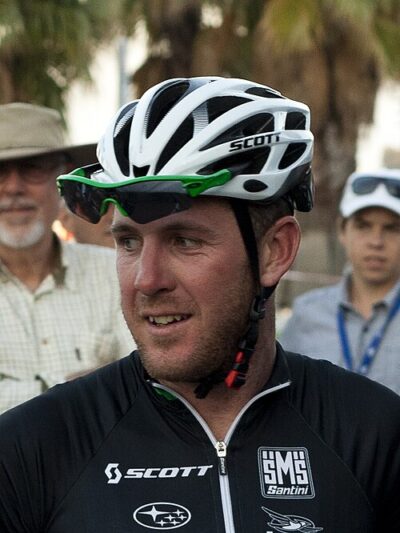
Matthew Goss is a road bicycle racer. Born November 5, 1986, in Launceston. Teams include Team Jayco-AIS (2006), Tinkoff (2007–2009) and HTC-Highroad (2010–2011).
Facts
14 facts · 1 confirmed by two sources · 1 cited · 12 from one source
Where this comes from
Papalocal keeps its own record. It started from these sources; what each one said is kept here as it was copied, so a change on their side never changes this page by itself. Tap one to read its version.
What Wikidata says · copied November 17, 2026 · revision 2539347756
- Described as
- road bicycle racer
- Other names
- Matthew Harley Goss
- Born
- November 5, 1986
- Born in
- Launceston
- Citizen of
- Australia
- Occupation
- sport cyclist · 1 reference
- Teams
- Team Jayco-AIS (2006); Tinkoff (2007–2009); HTC-Highroad (2010–2011); Team Jayco AlUla (2012–2014); Qhubeka NextHash (2015); ONE (2016)
- Sport
- track cycling; cycle sport
- Height
- 1.78 m (5 ft 10 in)
- Website
- http://www.matthewgoss.com.au
- Wikipedias with a page
- 25
Wikidata item Q256946 (wikidata.org/wiki/Q256946), public domain (CC0). Copied November 17, 2026.
What Wikipedia says · copied November 17, 2026 · revision 1380386566
Matthew Harley Goss (born 5 November 1986) is a former Australian professional road and track racing cyclist, his final professional team before retirement was the UCI Professional Continental team ONE Pro Cycling. He first competed in track cycling before making a transition to the road. He won a gold medal at the 2006 UCI Track Cycling World Championships in the Team Pursuit event and came in second place at the 2011 World Championships Road race. He also won the 2010 GP Ouest-France, the 2011 Milan–San Remo as well as 2 stages of the Giro d'Italia, among other victories.
- Born, in its opening lines
- November 5, 1986
From the Wikipedia article “Matthew Goss” (en.wikipedia.org/wiki/Matthew_Goss), by its contributors, under CC BY-SA 4.0 (creativecommons.org/licenses/by-sa/4.0/). Copied November 17, 2026; not changed.
Confirmed Two sources agree. Cited One source, and it names where it got it. One source One source, without a reference of its own. Sources disagree The sources disagree. We show the best-supported value and keep theirs below.
