
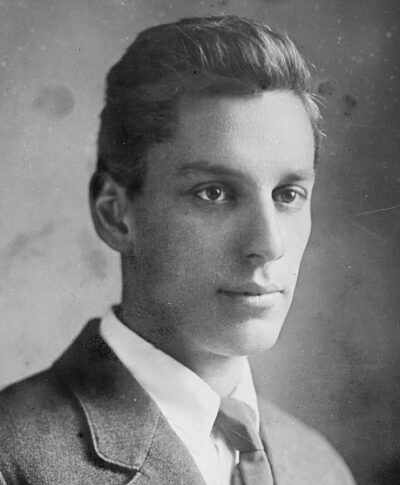
Max Eastman
Max Eastman was an American writer. Born January 4, 1883, in Canandaigua. Died March 25, 1969, in Bridgetown. Educated at Williams College and Columbia University.
Facts
23 facts · 2 confirmed by two sources · 4 cited · 17 from one source
Where this comes from
Papalocal keeps its own record. It started from these sources; what each one said is kept here as it was copied, so a change on their side never changes this page by itself. Tap one to read its version.
What Wikidata says · copied November 15, 2026 · revision 2568749124
- Described as
- American writer (1883-1969)
- Other names
- Max Forrester Eastman
- Born
- January 4, 1883 · 4 references
- Died
- March 25, 1969 · 6 references
- Born in
- Canandaigua
- Died in
- Bridgetown · 1 reference
- Citizen of
- United States
- Occupation
- essayist; writer · 2 references; literary critic; opinion journalist · 1 reference; poet; journalist; suffragist; peace activist · 1 reference
- Worked for
- Columbia University
- Education
- Williams College; Columbia University
- Member of
- Mont Pelerin Society
- Spouse
- Ida Rauh (1911–1922) · 1 reference; Eliena Krylenko (1924–1956); Yvette Szekely (1958–1969)
- Mother
- Annis Bertha Ford Eastman
- Siblings
- Crystal Eastman
- Religion
- atheism
- Wikipedias with a page
- 25
Wikidata item Q788572 (wikidata.org/wiki/Q788572), public domain (CC0). Copied November 15, 2026.
What Wikipedia says · copied November 15, 2026 · revision 1384895821
Max Forrester Eastman (January 4, 1883 – March 25, 1969) was an American writer on literature, philosophy, and society, a poet, and a prominent political activist. Moving to New York City for graduate school, Eastman became involved with radical circles in Greenwich Village. He supported socialism and became a leading patron of the Harlem Renaissance and an activist for a number of liberal and radical causes. For several years, he edited The Masses. With his sister Crystal Eastman, he co-founded in 1917 The Liberator, a radical magazine of politics and the arts.
While residing in the Soviet Union from the fall of 1922 to the summer of 1924, Eastman was influenced by the power struggle between Leon Trotsky and Joseph Stalin and the events leading to Stalin's eventual seizure of power. As a result of the Great Purge and the Soviet Union's totalitarianism, he became highly critical first of Stalinism and then of communism and socialism in general. While remaining an atheist, he became an advocate of free market economics and anti-communism. In 1955, he published Reflections on the Failure of Socialism. He published more frequently in National Review and other conservative journals in later life. He publicly opposed United States involvement in the Vietnam War in the 1960s.
- Born, in its opening lines
- January 4, 1883
- Died, in its opening lines
- March 25, 1969
From the Wikipedia article “Max Eastman” (en.wikipedia.org/wiki/Max_Eastman), by its contributors, under CC BY-SA 4.0 (creativecommons.org/licenses/by-sa/4.0/). Copied November 15, 2026; not changed.
Confirmed Two sources agree. Cited One source, and it names where it got it. One source One source, without a reference of its own. Sources disagree The sources disagree. We show the best-supported value and keep theirs below.
