
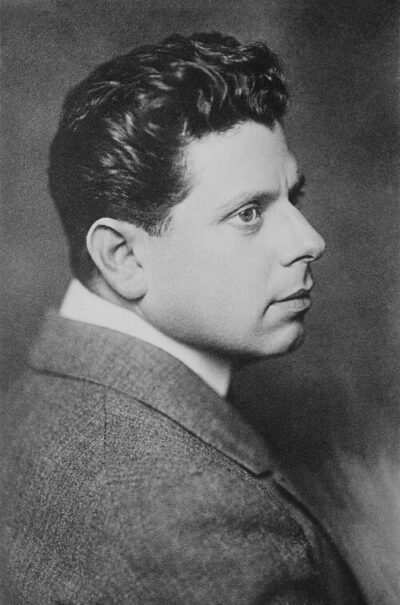
Max Reinhardt
Max Reinhardt was an Austrian-American theater director and actor. Born September 9, 1873, in Baden. Died October 30, 1943, in New York City.
Facts
23 facts · 2 confirmed by two sources · 10 cited · 11 from one source
What’s different
- Died: we show October 30, 1943 (Confirmed). Wikidata also lists October 31, 1943
Where this comes from
Papalocal keeps its own record. It started from these sources; what each one said is kept here as it was copied, so a change on their side never changes this page by itself. Tap one to read its version.
What Wikidata says · copied November 13, 2026 · revision 2568890390
- Described as
- Austrian-American theater director and actor (1873-1943)
- Other names
- Maximilian Goldmann, Max Goldmann
- Born
- September 9, 1873 · 7 references
- Died
- October 30, 1943 · 6 references; October 31, 1943 · 1 reference
- Born in
- Baden · 2 references
- Died in
- New York City · 3 references
- Buried in
- Westchester Hills Cemetery
- Cause of death
- stroke · 1 reference
- Citizen of
- Austria; United States (1940–)
- Occupation
- film director; actor · 2 references; university teacher; stage actor; theatre director; director · 2 references; theatre manager · 1 reference; Theaterintendant · 1 reference
- Worked for
- Deutsches Theater; Ernst Busch Academy of Dramatic Arts
- Spouse
- Helene Thimig (1935–1943)
- Children
- Wolfgang Reinhardt · 1 reference; Gottfried Reinhardt · 1 reference
- Father
- Wilhelm Goldmann · 1 reference
- Lived in
- Salzburg · 1 reference
- Wikipedias with a page
- 44
Wikidata item Q78639 (wikidata.org/wiki/Q78639), public domain (CC0). Copied November 13, 2026.
What Wikipedia says · copied November 13, 2026 · revision 1382868397
Max Reinhardt (German: [maks ˈʁaɪnhaʁt] ; born Maximilian Goldmann; 9 September 1873 – 30 October 1943) was an Austrian-born theatre and film director, intendant, and theatrical producer. With his radically innovative and avant-garde stage productions, Reinhardt is regarded as one of the most prominent stage directors of the early 20th century.
For example, Reinhardt's 1917 stage premiere of Reinhard Sorge's Kleist Prize-winning stage play Der Bettler almost single-handedly gave birth to Expressionism in theatre and ultimately in motion pictures as well. In 1920, Reinhardt established the Salzburg Festival by directing an open air production of Hugo von Hofmannsthal's acclaimed adaptation of the Everyman Medieval mystery play in the square before the Cathedral with the Alps as a background. This remains an annual custom at the Salzburg Festival to this day.
Toby Cole and Helen Krich Chinoy have dubbed Reinhardt, "one of the most picturesque actor-directors of modern times", and write that his eventual arrival in the United States as a refugee from the imminent Nazi takeover of Austria followed a long and distinguished career, "inspired by the example of social participation in the ancient Greek and Medieval theatres", of seeking, "to bridge the separation between actors and audiences".
In 1935, Reinhardt directed his first and only motion picture in the United States through Warner Brothers, the Expressionist film adaptation of William Shakespeare's A Midsummer Night's Dream, starring James Cagney, Olivia De Havilland, and Mickey Rooney. The film was banned by the Ministry of Propaganda in an infamous example of censorship in Nazi Germany. This was due not only to Joseph Goebbels' belief that Expressionism was degenerate art, but even more so due to the Jewish ancestry of Reinhardt, Classical composer Felix Mendelssohn, and soundtrack arranger Erich Wolfgang Korngold, whose work was already banned by Goebbels as allegedly degenerate music.
Reinhardt also founded the influential drama schools Hochschule für Schauspielkunst "Ernst Busch" in Berlin, Max Reinhardt Seminar, the Max Reinhardt Workshop (Sunset Boulevard), and the Max Reinhardt Junior Workshop. Although Reinhardt did not live long enough to witness the end of Nazism in 1945, his formerly expropriated estate at Schloss Leopoldskron near Salzburg was restored to his widow. His legacy continues to be celebrated and honoured in the modern Germanosphere for his radically innovative contributions to the performing arts.
- Born, in its opening lines
- September 9, 1873
- Died, in its opening lines
- October 30, 1943
From the Wikipedia article “Max Reinhardt” (en.wikipedia.org/wiki/Max_Reinhardt), by its contributors, under CC BY-SA 4.0 (creativecommons.org/licenses/by-sa/4.0/). Copied November 13, 2026; not changed.
Confirmed Two sources agree. Cited One source, and it names where it got it. One source One source, without a reference of its own. Sources disagree The sources disagree. We show the best-supported value and keep theirs below.
