
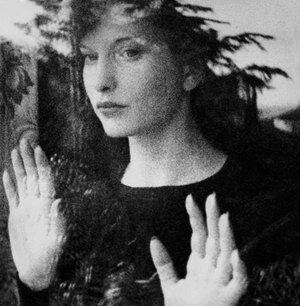
Maya Deren
Maya Deren was an Ukrainian-born American avant-garde filmmaker. Born April 29, 1917, in Kyiv. Died October 13, 1961, in New York City. Known for Meshes of the Afternoon. Educated at New York University and Syracuse University. Awards include Guggenheim Fellowship.
Facts
29 facts · 1 confirmed by two sources · 13 cited · 14 from one source · 1 where the sources disagree
What’s different
- Born: we show April 29, 1917 (Sources disagree). Wikipedia says May 12, 1917
Where this comes from
Papalocal keeps its own record. It started from these sources; what each one said is kept here as it was copied, so a change on their side never changes this page by itself. Tap one to read its version.
What Wikidata says · copied November 15, 2026 · revision 2564358702
- Described as
- Ukrainian-born American avant-garde filmmaker (1917–1961)
- Other names
- Eleanora Derenkowskaia, Eleanora Derenkowsky, Eleonora Derenkowsky
- Born
- April 29, 1917 · 1 reference
- Died
- October 13, 1961 · 9 references
- Born in
- Kyiv · 2 references
- Died in
- New York City · 1 reference
- Cause of death
- cerebral hemorrhage
- Citizen of
- United States · 1 reference; Russian Empire; Russian Republic; Ukrainian People's Republic
- Occupation
- film director; dancer · 1 reference; film editor · 1 reference; choreographer; film actor; poet · 1 reference; photographer · 2 references; director · 2 references
- Education
- New York University · 1 reference; Syracuse University · 1 reference; Smith College · 1 reference
- Known for
- Meshes of the Afternoon
- Awards
- Guggenheim Fellowship (1946) · 1 reference
- Field
- choreography · 1 reference; poetry · 1 reference; photography · 1 reference; dance · 1 reference; cinematography
- Spouse
- Alexandr Hackenschmied (1942–1947); Teiji Ito (1960–1961)
- Wikipedias with a page
- 36
Wikidata item Q450382 (wikidata.org/wiki/Q450382), public domain (CC0). Copied November 15, 2026.
What Wikipedia says · copied November 15, 2026 · revision 1385063352
Maya Deren (; born Eleonora Solomonovna Derenkovskaya; Russian: Элеонора Соломоновна Деренковская; May 12 [O.S. April 29], 1917 – October 13, 1961) was a Russian-born American experimental filmmaker and important part of the avant-garde in the 1940s and 1950s. Deren was also a choreographer, dancer, film theorist, poet, lecturer, writer, and photographer.
The function of film, Deren believed, was to create an experience. She combined her expertise in dance and choreography, ethnography, the African spirit religion of Haitian Vodou, symbolist poetry and gestalt psychology (as a student of Kurt Koffka) in a series of perceptual, black-and-white short films. Using editing, multiple exposures, jump-cutting, superimposition, slow-motion, and other camera techniques to her advantage, Deren abandoned established notions of physical space and time, innovating through carefully planned films with specific conceptual aims.
Meshes of the Afternoon (1943), her collaboration with her husband at the time, Alexander Hammid, has been one of the most influential experimental films in American cinema history. Deren went on to make several more films, including but not limited to At Land (1944), A Study in Choreography for Camera (1945), and Ritual in Transfigured Time (1946), writing, producing, directing, editing, and photographing them with help from only one other person, Hella Heyman, her camerawoman.
- Born, in its opening lines
- May 12, 1917
- Died, in its opening lines
- October 13, 1961
From the Wikipedia article “Maya Deren” (en.wikipedia.org/wiki/Maya_Deren), by its contributors, under CC BY-SA 4.0 (creativecommons.org/licenses/by-sa/4.0/). Copied November 15, 2026; not changed.
Confirmed Two sources agree. Cited One source, and it names where it got it. One source One source, without a reference of its own. Sources disagree The sources disagree. We show the best-supported value and keep theirs below.
