
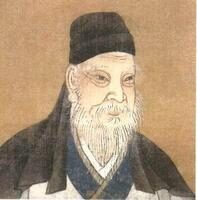
Meng Haoran
Meng Haoran was a poet from the Tang Dynasty. Born 7th century, in Xiangyang. Died 740, in Xiangyang. Known for A Spring Morning.
Facts
8 facts · 1 confirmed by two sources · 2 cited · 4 from one source · 1 where the sources disagree
What’s different
- Born: we show 7th century (Sources disagree). Wikipedia says 691
Where this comes from
Papalocal keeps its own record. It started from these sources; what each one said is kept here as it was copied, so a change on their side never changes this page by itself. Tap one to read its version.
What Wikidata says · copied November 16, 2026 · revision 2561452991
- Described as
- poet from the Tang Dynasty
- Other names
- Haoran, Meng Hao-jan
- Born
- 7th century · 1 reference
- Died
- 740 · 7 references
- Born in
- Xiangyang
- Died in
- Xiangyang
- Citizen of
- Tang dynasty · 1 reference
- Occupation
- poet · 1 reference; writer
- Known for
- A Spring Morning
- Wikipedias with a page
- 37
Wikidata item Q455589 (wikidata.org/wiki/Q455589), public domain (CC0). Copied November 16, 2026.
What Wikipedia says · copied November 16, 2026 · revision 1335100994
Meng Haoran (Chinese: 孟浩然; Wade–Giles: Mêng Hao-jan; 689/691–740) was a Chinese poet and a major literary figure of the Tang dynasty. He was a somewhat older contemporary of Wang Wei, Li Bai and Du Fu. Despite his brief pursuit of an official career, Meng Haoran spent most of his life in and around his hometown Xiangyang in Hubei Province, living like a hermit, while creating poems inspired by its landscapes and milieu.
Meng Haoran was a major influence on both contemporary and subsequent poets of the Tang dynasty due to his proficiency in Shanshui poetry and his disciplined, independent spirit. Meng was prominently featured in the Qing dynasty (and subsequently frequently republished) poetry anthology Three Hundred Tang Poems, having a total of fifteen poems included, the fifth largest number, exceeded only by Du Fu, Li Bai, Wang Wei, and Li Shangyin. These poems of Meng Haoran were made available in English translations by Witter Bynner and Kiang Kanghu with the publication of The Jade Mountain in 1920. In 2021, a complete translation of all Meng's poems by Paul W. Kroll was published as The Poetry of Meng Haoran, which also contains an introduction of Meng's life and historical contexts of his poetry.
The Three Hundred Tang Poems also collected two poems by Li Bai addressed to Meng Haoran, one in his praise and one written in farewell.
- Born, in its opening lines
- 691
- Died, in its opening lines
- 740
From the Wikipedia article “Meng Haoran” (en.wikipedia.org/wiki/Meng_Haoran), by its contributors, under CC BY-SA 4.0 (creativecommons.org/licenses/by-sa/4.0/). Copied November 16, 2026; not changed.
Confirmed Two sources agree. Cited One source, and it names where it got it. One source One source, without a reference of its own. Sources disagree The sources disagree. We show the best-supported value and keep theirs below.
