
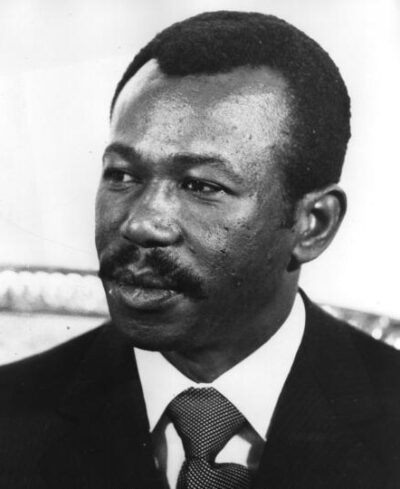
Mengistu Haile Mariam
Mengistu Haile Mariam is a former General Secretary of the Workers' Party of Ethiopia. Born May 21, 1937, in Galla-Sidamo Governorate. Positions held include President of Ethiopia (2 times) (1974–1991) and chairperson of the Organisation of African Unity (1983–1984). Awards include Order of José Martí, Order of the White Lion and Order of the October Revolution.
Facts
20 facts · 1 confirmed by two sources · 2 cited · 17 from one source
Where this comes from
Papalocal keeps its own record. It started from these sources; what each one said is kept here as it was copied, so a change on their side never changes this page by itself. Tap one to read its version.
What Wikidata says · copied November 16, 2026 · revision 2569627452
- Described as
- former General Secretary of the Workers' Party of Ethiopia
- Other names
- Mengistu Mariam
- Born
- May 21, 1937 · 2 references
- Born in
- Galla-Sidamo Governorate
- Citizen of
- Ethiopia; Zimbabwe
- Occupation
- politician · 2 references; military personnel
- Positions held
- President of Ethiopia (2 times) (1974–1991); chairperson of the Organisation of African Unity (1983–1984)
- Political party
- Workers' Party of Ethiopia; Commission for Organizing the Party of the Working People of Ethiopia
- Awards
- Order of José Martí; Order of the White Lion; Order of the October Revolution (1980); Order of Playa Girón
- Religion
- Ethiopian Orthodox Tewahedo Church · 1 reference; atheism · 1 reference
- Military branch
- Ethiopian National Defense Force · 1 reference
- Military rank
- Lieutenant Colonel; podpolkovnik · 1 reference
- Lived in
- Harare
- Wikipedias with a page
- 71
Wikidata item Q192512 (wikidata.org/wiki/Q192512), public domain (CC0). Copied November 16, 2026.
What Wikipedia says · copied November 16, 2026 · revision 1385933944
Mengistu Haile Mariam ( ; Amharic: መንግሥቱ ኃይለ ማርያም, pronunciation: [mənɡɨstu haɪlə marjam]; born 21 May 1937) is an Ethiopian former military officer and communist politician who was the leader of Ethiopia from 1977 to 1991. He was General Secretary of the Workers' Party of Ethiopia from 1984 to 1991, chairman of the Derg—the Marxist–Leninist military junta that ruled Ethiopia—from 1977 to 1987, and president of the People's Democratic Republic of Ethiopia (PDRE) from 1987 to 1991.
The Derg seized power in the Ethiopian Revolution following the overthrow of Emperor Haile Selassie in 1974, marking the end of the Solomonic dynasty which had ruled Ethiopia since the 13th century. Mengistu purged his rivals within the Derg and made himself leader of Ethiopia, attempting to modernize the country's feudal economy through Marxist–Leninist–inspired policies such as nationalization and land redistribution. His consolidation of power in 1977–1978 is known as the Ethiopian Red Terror—a brutal crackdown on opposition groups and civilians following a failed assassination attempt by the Ethiopian People's Revolutionary Party (EPRP) in September 1976, after it had ignored the Derg's invitation to join the union of socialist parties. The death toll is unknown but is estimated at between 30,000 and 750,000 by the Ethiopian Red Terror Documentation and Research Center.
Internal rebellion, government repression, and economic mismanagement characterized Mengistu's presidency, the Red Terror period being a battle for dominance between the Derg, the EPRP, and their rival the All-Ethiopia Socialist Movement (MEISON), which had initially aligned itself with the Derg. While this internal conflict was being fought, Ethiopia was threatened by both the Somali invasion and the guerrilla campaign of the Eritrean People's Liberation Front, who demanded independence for Eritrea, then a province of Ethiopia. The Ogaden War of 1977–1978 with Somalia, fought over a disputed border region (Ogaden), was notable for the prominent role of Mengistu's Soviet and Cuban allies in securing an Ethiopian victory. The catastrophic famine of 1983–1985 is what brought his government the most international attention.
Mengistu fled to Zimbabwe in May 1991 after the PDRE National Shengo dissolved itself and called for a transitional government. His departure brought an abrupt end to the Ethiopian Civil War. Mengistu Haile Mariam still lives in Harare, Zimbabwe, despite an Ethiopian court verdict which found him guilty of genocide in absentia. Mengistu's government is estimated to be responsible for the deaths of 500,000 to 2,000,000 Ethiopians, mostly during the 1983–1985 famine in Ethiopia.
- Born, in its opening lines
- May 21, 1937
From the Wikipedia article “Mengistu Haile Mariam” (en.wikipedia.org/wiki/Mengistu_Haile_Mariam), by its contributors, under CC BY-SA 4.0 (creativecommons.org/licenses/by-sa/4.0/). Copied November 16, 2026; not changed.
Confirmed Two sources agree. Cited One source, and it names where it got it. One source One source, without a reference of its own. Sources disagree The sources disagree. We show the best-supported value and keep theirs below.
