
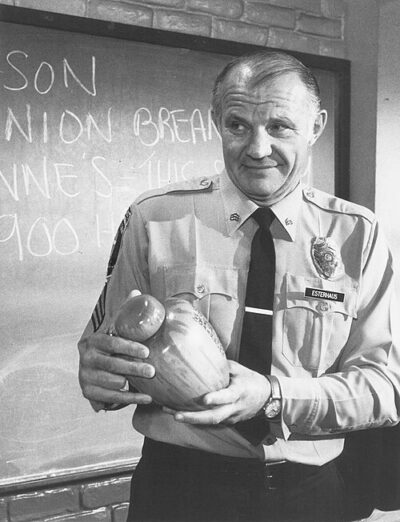
Michael Conrad
Michael Conrad was an American actor. Born October 16, 1925, in New York City. Died November 22, 1983, in Los Angeles. Awards include Primetime Emmy Award for Outstanding Supporting Actor in a Drama Series (2 times).
Facts
9 facts · 2 confirmed by two sources · 4 cited · 3 from one source
Where this comes from
Papalocal keeps its own record. It started from these sources; what each one said is kept here as it was copied, so a change on their side never changes this page by itself. Tap one to read its version.
What Wikidata says · copied November 18, 2026 · revision 2540283546
- Described as
- American actor (1925-1983)
- Born
- October 16, 1925 · 1 reference
- Died
- November 22, 1983 · 1 reference
- Born in
- New York City · 1 reference
- Died in
- Los Angeles · 1 reference
- Cause of death
- cancer
- Citizen of
- United States · 1 reference
- Occupation
- actor · 2 references; television actor
- Awards
- Primetime Emmy Award for Outstanding Supporting Actor in a Drama Series (2 times) (1981, 1982)
- Wikipedias with a page
- 17
Wikidata item Q1278413 (wikidata.org/wiki/Q1278413), public domain (CC0). Copied November 18, 2026.
What Wikipedia says · copied November 18, 2026 · revision 1381810276
Michael Conrad (October 16, 1925 – November 22, 1983) was an American actor, perhaps best known for his portrayal of veteran cop Sgt. Phil Esterhaus on Hill Street Blues—a role for which he won two Emmy Awards for Outstanding Supporting Actor in a Drama Series in 1981 and 1982. Among his other credits were the short-lived television series Delvecchio (1976–1977); and the films The War Lord (1965), They Shoot Horses, Don't They? (1969), The Todd Killings (1971), and The Longest Yard (1974).
- Born, in its opening lines
- October 16, 1925
- Died, in its opening lines
- November 22, 1983
From the Wikipedia article “Michael Conrad” (en.wikipedia.org/wiki/Michael_Conrad), by its contributors, under CC BY-SA 4.0 (creativecommons.org/licenses/by-sa/4.0/). Copied November 18, 2026; not changed.
Confirmed Two sources agree. Cited One source, and it names where it got it. One source One source, without a reference of its own. Sources disagree The sources disagree. We show the best-supported value and keep theirs below.
