
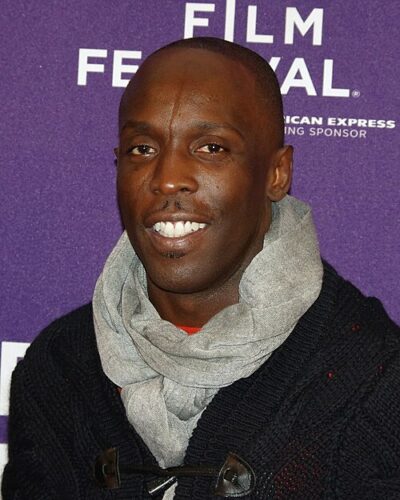
Michael K. Williams
Michael K. Williams was an American actor. Born November 22, 1966, in Brooklyn. Died September 6, 2021, in Williamsburg. Educated at George Westinghouse Career and Technical Education High School and Borough of Manhattan Community College. Awards include Screen Actors Guild Award for Outstanding Performance by an Ensemble in a Drama Series and Critics' Choice Television Award.
Facts
19 facts · 2 confirmed by two sources · 5 cited · 12 from one source
Where this comes from
Papalocal keeps its own record. It started from these sources; what each one said is kept here as it was copied, so a change on their side never changes this page by itself. Tap one to read its version.
What Wikidata says · copied November 14, 2026 · revision 2567569806
- Described as
- American actor (1966–2021)
- Other names
- Michael Kenneth Williams, Michael Williams
- Born
- November 22, 1966 · 2 references
- Died
- September 6, 2021 · 1 reference
- Born in
- Brooklyn · 1 reference
- Died in
- Williamsburg · 2 references
- Buried in
- East Harrisburg Cemetery
- Cause of death
- drug overdose · 2 references
- Citizen of
- United States
- Occupation
- television actor; film actor; actor · 1 reference; character actor; film producer · 1 reference
- Education
- George Westinghouse Career and Technical Education High School · 1 reference; Borough of Manhattan Community College
- Awards
- Screen Actors Guild Award for Outstanding Performance by an Ensemble in a Drama Series (2012); Critics' Choice Television Award (2021) · 1 reference
- Children
- Elijah Williams
- Father
- Booker · 1 reference
- Website
- http://www.michaelkennethwilliams.com
- Wikipedias with a page
- 39
Wikidata item Q921518 (wikidata.org/wiki/Q921518), public domain (CC0). Copied November 14, 2026.
What Wikipedia says · copied November 14, 2026 · revision 1376632057
Michael Kenneth Williams (November 22, 1966 – September 6, 2021) was an American actor. He rose to fame for his acclaimed portrayals of Omar Little on the HBO drama series The Wire (2002–2008), Albert "Chalky" White on the HBO series Boardwalk Empire (2010–2014), and Freddy Knight on the HBO series The Night Of.
Born in Brooklyn, New York City, to an African-American father from South Carolina and a Bahamian mother, Williams enrolled at the National Black Theatre. He left school early to pursue a career as a dancer, which resulted in his working with Kym Sims, George Michael, and Madonna, and found work choreographing music videos. His distinctive voice, prominent facial scar, and charisma helped him obtain acting work, initially alongside Tupac Shakur in the 1996 film Bullet before being cast in The Wire in 2002.
Williams earned five Primetime Emmy Award nominations for his performances in the HBO television biopic Bessie (2015), the Netflix drama series When They See Us (2019), the HBO crime series The Night Of (2016), and the HBO supernatural series Lovecraft Country (2020). He featured in Boardwalk Empire (2010-2014) as the character Chalky White. He had a recurring role in the NBC sitcom Community from 2011 to 2012. He also had supporting roles in a number of films including Gone Baby Gone (2007), The Road (2009), Inherent Vice (2014), and Motherless Brooklyn (2019), as well as starring roles in 12 Years a Slave (2013), Robocop (2014), The Purge: Anarchy (2014), The Gambler (2014), Triple 9 (2016), Ghostbusters (2016), and Assassin's Creed (2016).
During his career he acknowledged struggles with fame throughout his life, admitting that he had suffered from drug addictions during the height of his success. He continued to live in Brooklyn until his death in 2021 at age 54, after using heroin laced with a lethal amount of fentanyl. Four men were charged in the aftermath of his death with various crimes, including manslaughter.
- Born, in its opening lines
- November 22, 1966
- Died, in its opening lines
- September 6, 2021
From the Wikipedia article “Michael K. Williams” (en.wikipedia.org/wiki/Michael_K._Williams), by its contributors, under CC BY-SA 4.0 (creativecommons.org/licenses/by-sa/4.0/). Copied November 14, 2026; not changed.
Confirmed Two sources agree. Cited One source, and it names where it got it. One source One source, without a reference of its own. Sources disagree The sources disagree. We show the best-supported value and keep theirs below.
