
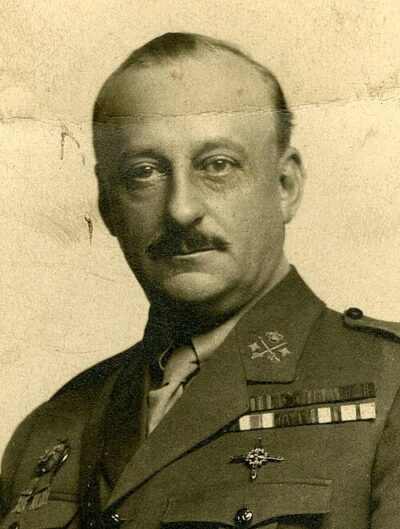
Miguel Primo de Rivera, 2nd Marquis of Estella
Miguel Primo de Rivera, 2nd Marquis of Estella was a Spanish politician; dictator, aristocrat, and military officer who served as Prime Minister of Spain from 1923 to 1930. Born January 8, 1870, in Jerez de la Frontera. Died March 16, 1930, in Paris. Positions held include President of the Council of Ministers (1925–1928), High Commissioner of Spain to Morocco (1924–1925) and capitán general de la Cuarta Región Militar (1922–1924). Awards include Collar of the Order of Isabella the Catholic, Order of the White Eagle and Order of Calatrava.
Facts
48 facts · 2 confirmed by two sources · 18 cited · 28 from one source
Where this comes from
Papalocal keeps its own record. It started from these sources; what each one said is kept here as it was copied, so a change on their side never changes this page by itself. Tap one to read its version.
What Wikidata says · copied November 16, 2026 · revision 2565563057
- Described as
- Spanish politician; dictator, aristocrat, and military officer who served as Prime Minister of Spain from 1923 to 1930
- Other names
- Miguel Primo de Rivera y Orbaneja
- Born
- January 8, 1870 · 9 references
- Died
- March 16, 1930 · 13 references
- Born in
- Jerez de la Frontera · 2 references
- Died in
- Paris · 3 references
- Buried in
- Iglesia-convento de la Merced (1947–) · 2 references
- Cause of death
- diabetes
- Name at birth
- Miguel Primo de Rivera y Orbaneja
- Citizen of
- Spain
- Occupation
- politician; military personnel; head of government · 1 reference
- Positions held
- President of the Council of Ministers (1925–1928) · 1 reference; High Commissioner of Spain to Morocco (1924–1925) · 2 references; capitán general de la Cuarta Región Militar (1922–1924) · 2 references; Senator of the Kingdom (1921–1922) · 1 reference; Minister of State of Spain (1927–1928) · 2 references; General captain of Valencia (1920–1921) · 2 references
- Political party
- Spanish Patriotic Union (1924–1930)
- Awards
- Collar of the Order of Isabella the Catholic (1929) · 2 references; Order of the White Eagle; Order of Calatrava; Knight Grand Cross of the Order of Saint Ferdinand (2 times) (1894, 1925) · 1 reference; Grand Cross of the Cross of Military Merit with Red Decoration (1913) · 1 reference; Grand Cross of Naval Merit with red badge; Grand Cross of the Legion of Honour; Order of Aviz; Order of Merit; Grand Cross of the Military Order of the Tower and Sword (1929) · 1 reference; Order of the White Lion (1925) · 1 reference; Grand Cross of the Military Order of Christ (1927) · 1 reference; Medal of Work Merit (1927) · 1 reference; Grand Cross of the Royal and Military Order of Saint Hermenegild (1925) · 1 reference; Order of the Dannebrog · 1 reference
- Spouse
- Casilda Sáenz de Heredia (1902–1908) · 1 reference
- Children
- José Antonio Primo de Rivera · 1 reference; Pilar Primo de Rivera · 1 reference; Fernando Primo de Rivera y Sáenz de Heredia; Miguel Primo de Rivera y Sáenz de Heredia; Carmen Primo de Rivera
- Father
- Miguel Primo de Rivera y Sobremonte
- Mother
- Inés Orbaneja y Pérez de Grandallana
- Siblings
- María Jesús Primo de Rivera y Orbaneja · 1 reference; José Primo de Rivera y Orbaneja · 1 reference; Fernando Primo de Rivera y Orbaneja
- Religion
- Catholicism
- Military branch
- Spanish Army · 1 reference
- Military rank
- Capitán General; general · 2 references
- Wikipedias with a page
- 65
Wikidata item Q192894 (wikidata.org/wiki/Q192894), public domain (CC0). Copied November 16, 2026.
What Wikipedia says · copied November 16, 2026 · revision 1383732999
Miguel Primo de Rivera y Orbaneja, 2nd Marquis of Estella, GE (8 January 1870 – 16 March 1930), was a Spanish dictator and military officer who ruled as prime minister of Spain from 1923 to 1930 during the last years of the Bourbon Restoration.
He was born into a landowning family of Andalusian aristocrats. He met his baptism by fire in October 1893 in Cabrerizas Altas during the so-called Margallo War. He moved up the military ladder, promoted to brigadier general (1911), division general (1914), and lieutenant general (1919). He went on to serve as administrator of the Valencia, Madrid, and Barcelona military regions, distinguishing himself as a voice in favour of military withdrawal from Africa.
During the crisis of the Restoration regime, specifically upon political turmoil in the wake of setbacks in the Rif War and the ensuing spillover of the enquiries of the Picasso file, Primo de Rivera staged a military coup d'état on 13 September 1923 with help from a clique of Africanist generals close to King Alfonso XIII. The coup enjoyed the acquiescence of the monarch, and Primo de Rivera was ensuingly tasked to form a government. He thereby proceeded to suspend the 1876 constitution and establish martial law.
His dictatorial rule was marked by authoritarian nationalism and populism. Primo de Rivera initially said he would rule for only 90 days; however, he chose to remain in power, heading a military directorate. In December 1925, after the Alhucemas landing ended Rifian anti-colonial resistance, he installed the Civil Directory. From 1927 a policy of public spending on infrastructures was pursued and state monopolies such as oil company Campsa were created. Once economic tailwinds diminished, he lost the support of most of his generals, and he was forced to resign in January 1930 amid increasing inflation and civic unrest, dying abroad two months later.
Some of his children, such as José Antonio and Pilar, went on to become Falangist political leaders.
- Born, in its opening lines
- January 8, 1870
- Died, in its opening lines
- March 16, 1930
From the Wikipedia article “Miguel Primo de Rivera” (en.wikipedia.org/wiki/Miguel_Primo_de_Rivera), by its contributors, under CC BY-SA 4.0 (creativecommons.org/licenses/by-sa/4.0/). Copied November 16, 2026; not changed.
Confirmed Two sources agree. Cited One source, and it names where it got it. One source One source, without a reference of its own. Sources disagree The sources disagree. We show the best-supported value and keep theirs below.
