
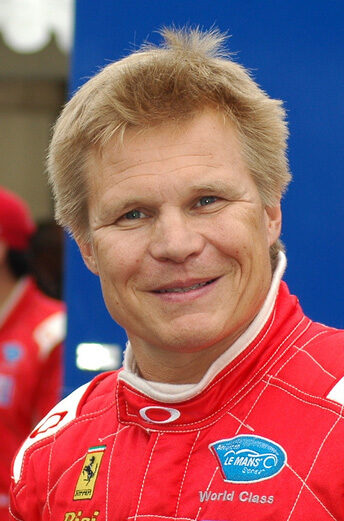
Mika Salo is a Finnish racing driver. Born November 30, 1966, in Helsinki.
Facts
9 facts · 1 confirmed by two sources · 1 cited · 7 from one source
Where this comes from
Papalocal keeps its own record. It started from these sources; what each one said is kept here as it was copied, so a change on their side never changes this page by itself. Tap one to read its version.
What Wikidata says · copied November 16, 2026 · revision 2545596819
- Described as
- Finnish racing driver (1966-)
- Other names
- Mika Juhani Salo
- Born
- November 30, 1966 · 1 reference
- Born in
- Helsinki
- Name at birth
- Mika Juhani Salo
- Citizen of
- Finland
- Occupation
- Formula One driver; racing automobile driver · 1 reference
- Sport
- auto racing
- Spouse
- Noriko Endo
- Children
- Max Salo · 1 reference
- Wikipedias with a page
- 40
Wikidata item Q173094 (wikidata.org/wiki/Q173094), public domain (CC0). Copied November 16, 2026.
What Wikipedia says · copied November 16, 2026 · revision 1385778957
Mika Juhani Salo (born 30 November 1966) is a Finnish former racing driver and broadcaster, who competed in Formula One from 1994 to 2002. In sportscar racing, Salo won the 2007 American Le Mans Series title, as well as winning the 24 Hours of Le Mans in 2008 and 2009 in the GT2 class. He also won the 2014 Bathurst 12 Hour.
Salo's best ranking was 10th in the world championship in 1999, when he stood in for the injured Michael Schumacher at Ferrari for six races, scoring two podiums and ten points, contributing to Ferrari's constructors' championship win by a four-point margin. He then raced for Sauber in 2000, and joined Toyota for their debut in 2002, which would be his final season in Formula One.
- Born, in its opening lines
- November 30, 1966
From the Wikipedia article “Mika Salo” (en.wikipedia.org/wiki/Mika_Salo), by its contributors, under CC BY-SA 4.0 (creativecommons.org/licenses/by-sa/4.0/). Copied November 16, 2026; not changed.
Confirmed Two sources agree. Cited One source, and it names where it got it. One source One source, without a reference of its own. Sources disagree The sources disagree. We show the best-supported value and keep theirs below.
