
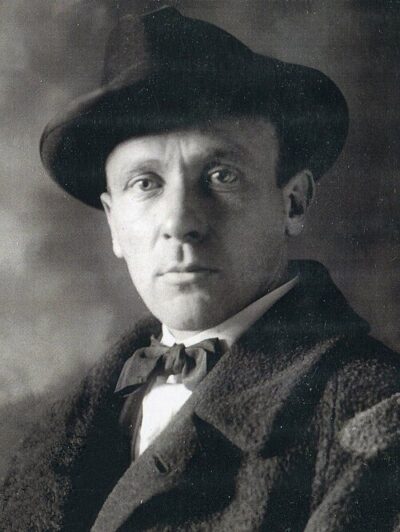
Mikhail Bulgakov
Mikhail Bulgakov was a Russian author. Born May 3, 1891, in Kyiv. Died March 10, 1940, in Moscow. Known for The Master and Margarita, The Heart of a Dog and The White Guard. Educated at Kiev Gymnasium and Bogomolets National Medical University.
Facts
45 facts · 1 confirmed by two sources · 14 cited · 29 from one source · 1 where the sources disagree
What’s different
- Born: we show May 3, 1891 (Sources disagree). Wikipedia says May 15, 1891
Where this comes from
Papalocal keeps its own record. It started from these sources; what each one said is kept here as it was copied, so a change on their side never changes this page by itself. Tap one to read its version.
What Wikidata says · copied November 16, 2026 · revision 2569943358
- Described as
- Russian author (1891–1940)
- Other names
- Mikhail Afanasyevich Bulgakov, Mikhail A. Bulgakov, Michael Bulgakov, Mikhail Afanasevich Bulgakov, Michail Boelgakov, Mihail A. Bulgakov
- Born
- May 3, 1891 · 2 references
- Died
- March 10, 1940 · 17 references
- Born in
- Kyiv · 5 references
- Died in
- Moscow · 4 references
- Buried in
- Novodevichy Cemetery · 1 reference
- Cause of death
- kidney failure · 1 reference
- Citizen of
- Russian Empire; Russian Soviet Federative Socialist Republic; Soviet Union
- Occupation
- novelist · 1 reference; playwright · 2 references; physician · 2 references; satirist; short story writer; librettist; screenwriter; science fiction writer
- Education
- Kiev Gymnasium (–1909); Bogomolets National Medical University (1909–1916)
- Member of
- International Red Cross and Red Crescent Movement; All-Russian Association of Writers (1923–)
- Genre
- satire; supernatural fiction; science fiction; short novel · 1 reference
- Known for
- The Master and Margarita · 1 reference; The Heart of a Dog; The White Guard
- Field
- belletristic literature · 1 reference; drama · 1 reference; journalism · 1 reference; creative and professional writing · 1 reference
- Spouse
- Tatjana Lappa (1913–1924); Lyubov Belozerskaya (1924–1932) · 1 reference; Elena Sergeevna Bulgakova (1932–1940) · 1 reference
- Father
- Afanasiy Bulgakov
- Religion
- Eastern Orthodoxy
- Military branch
- Ukrainian People's Army; Armed Forces of South Russia
- Lived in
- Kyiv (–1914); Moscow (1923–); Kamianets-Podilskyi; Chernivtsi; Vyazma
- Website
- http://bulgakov.ru/
- Wikipedias with a page
- 119
Wikidata item Q835 (wikidata.org/wiki/Q835), public domain (CC0). Copied November 16, 2026.
What Wikipedia says · copied November 16, 2026 · revision 1381740785
Mikhail Afanasyevich Bulgakov ( buul-GAH-kof; Russian: Михаи́л Афана́сьевич Булга́ков, IPA: [mʲɪxɐˈil ɐfɐˈnasʲjɪvʲɪdʑ bʊlˈɡakəf] 15 May [O.S. 3 May] 1891 – 10 March 1940) was a Russian and Soviet novelist and playwright. His novel The Master and Margarita, published posthumously, has been called one of the masterpieces of the 20th century. He also wrote the novel The White Guard and the plays Ivan Vasilievich, Flight (also called The Run), and The Days of the Turbins.
Some of his works (Flight, all his works between 1922 and 1926, and others) were banned by the Soviet government, and personally by Joseph Stalin, after it was decided by them that they "glorified emigration and White generals". On the other hand, Stalin loved The Days of the Turbins. The Soviet leader reportedly attended the play at least 15 times, even calling a theater to personally demand its production after the playwright's fall from favor. Despite Stalin's intercession in this and other matters Bulgakov was only briefly successful during his lifetime. After his death, especially once the publication of The Master and Margarita had been accomplished in 1966–67, his work was reassessed. He is now widely regarded as one of the great Russian authors of the 20th century.
- Born, in its opening lines
- May 15, 1891
- Died, in its opening lines
- March 10, 1940
From the Wikipedia article “Mikhail Bulgakov” (en.wikipedia.org/wiki/Mikhail_Bulgakov), by its contributors, under CC BY-SA 4.0 (creativecommons.org/licenses/by-sa/4.0/). Copied November 16, 2026; not changed.
Confirmed Two sources agree. Cited One source, and it names where it got it. One source One source, without a reference of its own. Sources disagree The sources disagree. We show the best-supported value and keep theirs below.
