
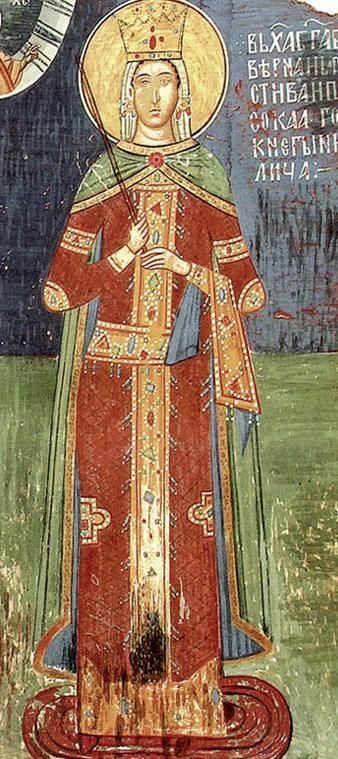
Milica Hrebeljanović was a poet. Born 1335. Died November 11, 1405, in Ljubostinja. Positions held include abbess and lord of Wallachia.
Facts
21 facts · 0 confirmed by two sources · 0 cited · 21 from one source
Where this comes from
Papalocal keeps its own record. It started from these sources; what each one said is kept here as it was copied, so a change on their side never changes this page by itself. Tap one to read its version.
What Wikidata says · copied November 18, 2026 · revision 2554000171
- Described as
- poet (1335-1405)
- Born
- 1335
- Died
- November 11, 1405
- Died in
- Ljubostinja
- Buried in
- Ljubostinja
- Citizen of
- Moravian Serbia
- Occupation
- poet; writer; consort
- Positions held
- abbess; lord of Wallachia
- Field
- poetry
- Spouse
- Lazar Hrebeljanović
- Children
- Jelena Balšić; Olivera Lazarević; Mara Lazarevic Brankovic; Vuk Lazarević; Dragana of Serbia; Stefan Lazarević; Teodora Lazarević · 1 reference
- Father
- Vratko Nemanjić
- Religion
- Eastern Orthodoxy
- Wikipedias with a page
- 22
Wikidata item Q439595 (wikidata.org/wiki/Q439595), public domain (CC0). Copied November 18, 2026.
What Wikipedia says · copied November 18, 2026 · revision 1368439657
Princess Milica Hrebeljanović née Nemanjić (Serbian: Милица Немањић Хребељановић · ca. 1335 – November 11, 1405) also known as Empress (Tsaritsa) Milica, was a royal consort of Serbia by marriage to Prince Lazar, who fell in the Battle of Kosovo. After her husband's death, she took the role as queen regent of Serbia from 1389 to 1393, until her son, despot Stefan Lazarević came of age.
She later became a Serbian Orthodox nun under the name Jevgenija. She is the author of "A Mother's Prayer" (Serbian: Молитва матере) and a famous poem of mourning for her husband, My Widowhood's Bridegroom (Serbian: Удовству мојему женик).
From the Wikipedia article “Princess Milica of Serbia” (en.wikipedia.org/wiki/Princess_Milica_of_Serbia), by its contributors, under CC BY-SA 4.0 (creativecommons.org/licenses/by-sa/4.0/). Copied November 18, 2026; not changed.
Confirmed Two sources agree. Cited One source, and it names where it got it. One source One source, without a reference of its own. Sources disagree The sources disagree. We show the best-supported value and keep theirs below.
