
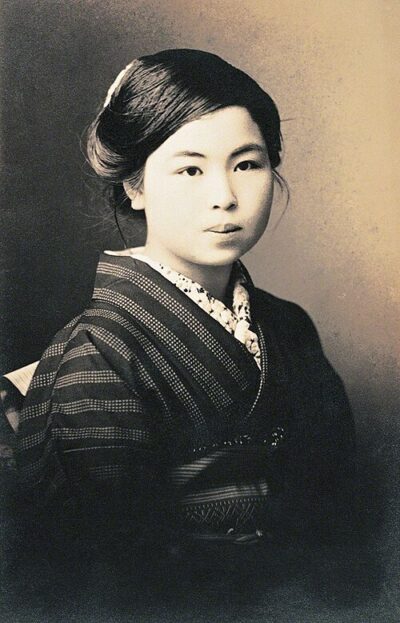
Misuzu Kaneko was a Japanese poet. Born April 11, 1903, in Ōtsu district. Died March 10, 1930, in Shimonoseki.
Facts
11 facts · 2 confirmed by two sources · 5 cited · 4 from one source
Where this comes from
Papalocal keeps its own record. It started from these sources; what each one said is kept here as it was copied, so a change on their side never changes this page by itself. Tap one to read its version.
What Wikidata says · copied November 17, 2026 · revision 2526940047
- Described as
- Japanese poet
- Born
- April 11, 1903 · 1 reference
- Died
- March 10, 1930 · 1 reference
- Born in
- Ōtsu district · 1 reference
- Died in
- Shimonoseki · 1 reference
- Name at birth
- 金子テル · 1 reference
- Citizen of
- Japan
- Occupation
- poet; lyricist; writer · 1 reference
- Field
- poetry
- Siblings
- Gasuke Kamiyama · 1 reference
- Wikipedias with a page
- 26
Wikidata item Q291489 (wikidata.org/wiki/Q291489), public domain (CC0). Copied November 17, 2026.
What Wikipedia says · copied November 17, 2026 · revision 1368122653
Misuzu Kaneko (金子 みすゞ, Kaneko Misuzu; April 11, 1903 – March 10, 1930) was a Japanese poet, known for her poetry for children. She was born Teru Kaneko (金子 テル, Kaneko Teru) in the fishing village of Senzaki, now part of Nagato, Yamaguchi prefecture. Motifs of fishing and the sea often make appearances in her poems. Celebrated during her lifetime, her works fell into obscurity after her death, until being rediscovered in the 1980s. Since then, she has been regarded as one of Japan's most beloved children's poets.
Kaneko has been compared to Christina Rossetti. Her poems have been translated into eleven languages.
- Born, in its opening lines
- April 11, 1903
- Died, in its opening lines
- March 10, 1930
From the Wikipedia article “Misuzu Kaneko” (en.wikipedia.org/wiki/Misuzu_Kaneko), by its contributors, under CC BY-SA 4.0 (creativecommons.org/licenses/by-sa/4.0/). Copied November 17, 2026; not changed.
Confirmed Two sources agree. Cited One source, and it names where it got it. One source One source, without a reference of its own. Sources disagree The sources disagree. We show the best-supported value and keep theirs below.
