
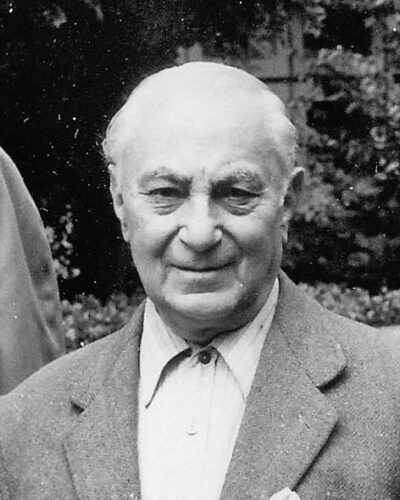
Mohammad-Ali Jamalzadeh
Mohammad-Ali Jamalzadeh was an Iranian writer. Born January 13, 1892, in Isfahan. Died November 8, 1997, in Geneva. Educated at University of Lausanne and University of Burgundy Europe.
Facts
16 facts · 2 confirmed by two sources · 4 cited · 10 from one source
Where this comes from
Papalocal keeps its own record. It started from these sources; what each one said is kept here as it was copied, so a change on their side never changes this page by itself. Tap one to read its version.
What Wikidata says · copied November 17, 2026 · revision 2558174073
- Described as
- Iranian writer (1892-1997)
- Other names
- Muhammad Cali Jamalzadeh
- Born
- January 13, 1892 · 2 references
- Died
- November 8, 1997 · 2 references
- Born in
- Isfahan · 1 reference
- Died in
- Geneva · 1 reference
- Buried in
- Petit-Saconnex Cemetery
- Citizen of
- Iran
- Occupation
- linguist; writer · 1 reference; historian; novelist; translator · 1 reference; poet · 1 reference; short story writer
- Education
- University of Lausanne; University of Burgundy Europe; Collège Saint Joseph – Antoura
- Wikipedias with a page
- 25
Wikidata item Q1393111 (wikidata.org/wiki/Q1393111), public domain (CC0). Copied November 17, 2026.
What Wikipedia says · copied November 17, 2026 · revision 1378510138
Mohammad-Ali Jamālzādeh Esfahani (Persian: محمدعلی جمالزاده اصفهانی; 13 January 1892 in Isfahan, Iran – 8 November 1997 in Geneva, Switzerland) was one of the most prominent writers of Iran in the 20th century, best known for his unique style of humour. In view of his vast influence over Persian short story writing, he is often referred to as the father of this genre in Iran.
- Born, in its opening lines
- January 13, 1892
- Died, in its opening lines
- November 8, 1997
From the Wikipedia article “Mohammad-Ali Jamalzadeh” (en.wikipedia.org/wiki/Mohammad-Ali_Jamalzadeh), by its contributors, under CC BY-SA 4.0 (creativecommons.org/licenses/by-sa/4.0/). Copied November 17, 2026; not changed.
Confirmed Two sources agree. Cited One source, and it names where it got it. One source One source, without a reference of its own. Sources disagree The sources disagree. We show the best-supported value and keep theirs below.
