
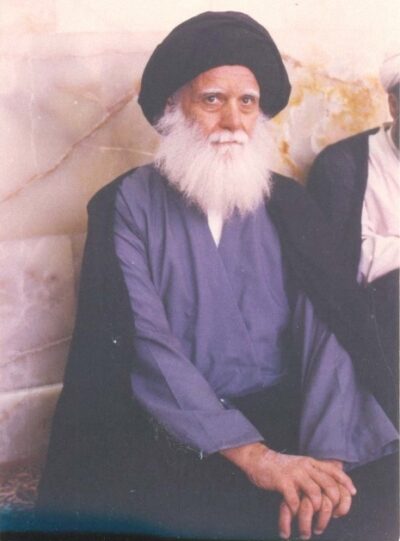
Mohammad Mohammad Sadeq al-Sadr
Mohammad Mohammad Sadeq al-Sadr was an Iraqi Twelver Shi'a cleric. Born March 23, 1943, in Najaf. Died February 19, 1999, in Najaf.
Facts
13 facts · 2 confirmed by two sources · 4 cited · 7 from one source
Where this comes from
Papalocal keeps its own record. It started from these sources; what each one said is kept here as it was copied, so a change on their side never changes this page by itself. Tap one to read its version.
What Wikidata says · copied November 18, 2026 · revision 2567173728
- Described as
- Iraqi Twelver Shi'a cleric (1943-1999)
- Other names
- Grand Ayatollah Mohammad Mohammad Sadeq al-Sadr, Mohammad Sadeq al-Sadr
- Born
- March 23, 1943 · 1 reference
- Died
- February 19, 1999 · 1 reference
- Born in
- Najaf
- Died in
- Najaf · 1 reference
- Citizen of
- Iraq
- Occupation
- theologian; politician · 1 reference; ayatollah · 1 reference; scholar · 1 reference
- Children
- Muqtada al-Sadr
- Father
- Mohammed Sadeq al-Sadr
- Religion
- Shia Islam
- Lived in
- Al-Hannana · 1 reference
- Wikipedias with a page
- 21
Wikidata item Q659184 (wikidata.org/wiki/Q659184), public domain (CC0). Copied November 18, 2026.
What Wikipedia says · copied November 18, 2026 · revision 1378168012
Grand Ayatollah Sayyid Mohammed al-Sadr (Arabic: محمّد الصدر; born 23 March 1943 – 19 February 1999) was a prominent Iraqi Twelver Shiite cleric and marja'. He called for government reform and the release of detained Shia leaders during the rule of Saddam Hussein. The growth of his popularity, often referred to as the followers of the local Hawza, also put him in competition with other Shi'a leaders, including Mohammed Baqir al-Hakim who was exiled in Iran.
- Born, in its opening lines
- March 23, 1943
- Died, in its opening lines
- February 19, 1999
From the Wikipedia article “Mohammed al-Sadr” (en.wikipedia.org/wiki/Mohammed_al-Sadr), by its contributors, under CC BY-SA 4.0 (creativecommons.org/licenses/by-sa/4.0/). Copied November 18, 2026; not changed.
Confirmed Two sources agree. Cited One source, and it names where it got it. One source One source, without a reference of its own. Sources disagree The sources disagree. We show the best-supported value and keep theirs below.
