
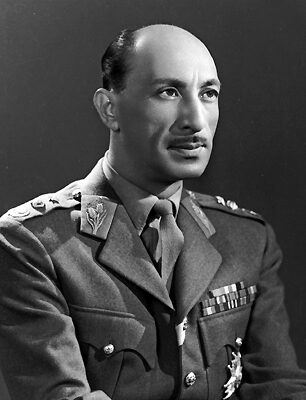
Mohammed Zahir Shah
Mohammed Zahir Shah was a King of Afghanistan. Born October 15, 1914, in Kabul. Died July 23, 2007, in Kabul. Positions held include Monarch of Afghanistan (1933–1973). Educated at Lycée Janson-de-Sailly and Military College Jhelum. Awards include Grand Cross of the Legion of Honour, Royal Victorian Chain and Order of the Supreme Sun.
Facts
41 facts · 2 confirmed by two sources · 4 cited · 35 from one source
Where this comes from
Papalocal keeps its own record. It started from these sources; what each one said is kept here as it was copied, so a change on their side never changes this page by itself. Tap one to read its version.
What Wikidata says · copied November 16, 2026 · revision 2565419588
- Described as
- King of Afghanistan (1933-1973)
- Other names
- King Zaher Shah of Afghanistan, Zahir Shah of Afghanistan
- Born
- October 15, 1914 · 9 references
- Died
- July 23, 2007 · 9 references
- Born in
- Kabul · 1 reference
- Died in
- Kabul · 1 reference
- Buried in
- Kabul
- Citizen of
- Afghanistan
- Occupation
- politician
- Positions held
- Monarch of Afghanistan (1933–1973)
- Education
- Lycée Janson-de-Sailly; Military College Jhelum; Habibia High School; Lycée Michelet, Vanves
- Awards
- Grand Cross of the Legion of Honour; Royal Victorian Chain (1972); Order of the Supreme Sun; Grand Cross Special Class of the Order of Merit of the Federal Republic of Germany (1963); Grand Cordon of the National Order of the Cedar; Order of the Yugoslav Star; Order of Pahlavi; Grand Cordon of the Order of Leopold; Grand cross of the Order of the White Lion; Order of al-Hussein bin Ali; Knight Grand Cross with Collar of the Order of Merit of the Italian Republic; Nishan-e-Pakistan; Grand Order of the Hashimites; Grand Cross of the Order of the Redeemer; Order of Muhammad Ali
- Spouse
- Humaira Begum (1931–2002) · 1 reference
- Children
- Princess Bilqis Begum of Afghanistan; Muhammad Akbar Khan, Crown Prince of Afghanistan; Ahmad Shah Khan, Crown Prince of Afghanistan; Princess Maryam Begum of Afghanistan; Prince Muhammad Nadir Khan of Afghanistan; Prince Shah Mahmud Khan of Afghanistan; Prince Muhammad Daoud Pashtunyar Khan of Afghanistan; Prince Mirwais Khan of Afghanistan
- Father
- Mohammed Nadir Shah · 1 reference
- Mother
- Mah Parwar Begum
- Religion
- Sunni Islam
- Lived in
- Darul Aman Palace · 1 reference; Olgiata (1973–2002)
- Wikipedias with a page
- 72
Wikidata item Q152265 (wikidata.org/wiki/Q152265), public domain (CC0). Copied November 16, 2026.
What Wikipedia says · copied November 16, 2026 · revision 1385589707
Mohammad Zahir Shah (15 October 1914 – 23 July 2007) was the last king of Afghanistan, reigning from 8 November 1933 until he was deposed on 17 July 1973. Ruling for almost 40 years, Zahir Shah was the longest-serving ruler of Afghanistan since the foundation of the Durrani Empire in the 18th century.
He expanded Afghanistan's diplomatic relations with many countries, including with both sides of the Cold War. In the 1950s, Zahir Shah began modernizing the country, culminating in the creation of a new constitution and a constitutional monarchy system. Demonstrating nonpartisanism, his long reign was marked by peace in the country which was lost afterwards with the onset of the Afghan conflict.
In 1973, while Zahir Shah was undergoing medical treatment in Italy, his regime was overthrown in a coup d'état by his cousin and former prime minister, Sardar Mohammad Daoud Khan, who established a single-party republic, ending more than 225 years of continuous monarchical government. He remained in exile near Rome until 2002, returning to Afghanistan after the end of the Taliban government. He was given the title Father of the Nation, which he held until his death in 2007.
- Born, in its opening lines
- October 15, 1914
- Died, in its opening lines
- July 23, 2007
From the Wikipedia article “Mohammad Zahir Shah” (en.wikipedia.org/wiki/Mohammad_Zahir_Shah), by its contributors, under CC BY-SA 4.0 (creativecommons.org/licenses/by-sa/4.0/). Copied November 16, 2026; not changed.
Confirmed Two sources agree. Cited One source, and it names where it got it. One source One source, without a reference of its own. Sources disagree The sources disagree. We show the best-supported value and keep theirs below.
