
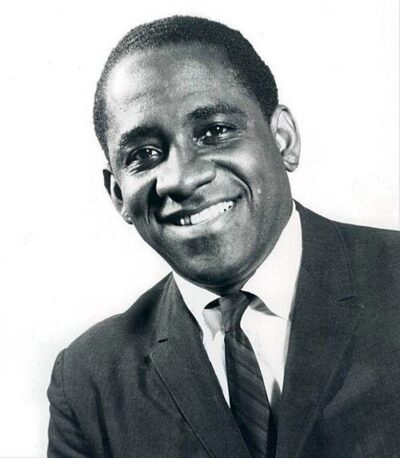
Mongo Santamaría
Mongo Santamaría was a Cuban musician. Born April 7, 1917, in Havana. Died February 1, 2003, in Miami. Awards include Billboard Latin Music Hall of Fame.
Facts
19 facts · 2 confirmed by two sources · 7 cited · 10 from one source
What’s different
- Born: we show April 7, 1917 (Confirmed). Wikidata also lists April 7, 1922
Where this comes from
Papalocal keeps its own record. It started from these sources; what each one said is kept here as it was copied, so a change on their side never changes this page by itself. Tap one to read its version.
What Wikidata says · copied November 18, 2026 · revision 2563877492
- Described as
- Cuban musician (1917–2003)
- Other names
- Mongo Santamaria, Ramon Santamaria, Ramón Santamaría Rodríguez
- Born
- April 7, 1917 · 4 references; April 7, 1922 · 2 references
- Died
- February 1, 2003 · 6 references
- Born in
- Havana · 2 references
- Died in
- Miami · 1 reference
- Cause of death
- stroke
- Name at birth
- Ramón Santamaría Rodríguez
- Citizen of
- Cuba · 1 reference
- Occupation
- percussionist; jazz musician; singer · 1 reference; recording artist; musician · 1 reference; bandleader · 1 reference
- Genre
- Latin jazz · 1 reference
- Instrument
- conga · 1 reference
- Record label
- Columbia Records; Fania Records; Fantasy
- Awards
- Billboard Latin Music Hall of Fame (2001)
- Wikipedias with a page
- 23
Wikidata item Q472644 (wikidata.org/wiki/Q472644), public domain (CC0). Copied November 18, 2026.
What Wikipedia says · copied November 18, 2026 · revision 1374101079
Ramón "Mongo" Santamaría Rodríguez (April 7, 1917 – February 1, 2003) was a Cuban percussionist and bandleader who spent most of his career in the United States. Primarily a conga drummer, Santamaría was a leading figure in the pachanga and boogaloo dance crazes of the 1960s. His biggest hit was his rendition of Herbie Hancock's "Watermelon Man", which was inducted into the Grammy Hall of Fame in 1998. From the 1970s, he recorded mainly salsa and Latin jazz, before retiring in the late 1990s.
Santamaría learned to play the congas as an amateur rumba musician in the streets of Havana. He then learned the bongos from Clemente "Chicho" Piquero and toured with various successful bands such as the Lecuona Cuban Boys and Sonora Matancera. In 1950, he moved to New York City, where he became Tito Puente's conguero and in 1957 he joined Cal Tjader's band. He then formed his own charanga, while at the same time recording some of the first rumba and Santería music albums. By the end of the decade, he had his first pachanga hit, "Para ti". He then became a pioneer of boogaloo with "Watermelon Man" and later signed record deals with Columbia, Atlantic and Fania. He collaborated with salsa artists and became a member of the Fania All-Stars, often showcasing his conga solos against Ray Barretto. In his later years, Santamaría recorded mostly Latin jazz for Concord Jazz and Chesky Records.
- Born, in its opening lines
- April 7, 1917
- Died, in its opening lines
- February 1, 2003
From the Wikipedia article “Mongo Santamaría” (en.wikipedia.org/wiki/Mongo_Santamaría), by its contributors, under CC BY-SA 4.0 (creativecommons.org/licenses/by-sa/4.0/). Copied November 18, 2026; not changed.
Confirmed Two sources agree. Cited One source, and it names where it got it. One source One source, without a reference of its own. Sources disagree The sources disagree. We show the best-supported value and keep theirs below.
