
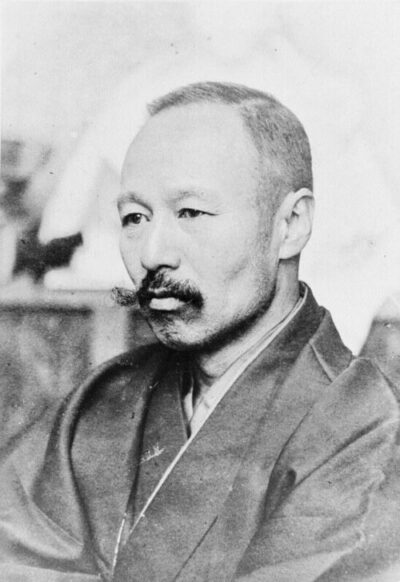
Mori Ōgai
Mori Ōgai was a Japanese novelist and army physician. Born February 17, 1862, in Tsuwano. Died July 9, 1922, in Tokyo. Known for The Dancing Girl, Utakata no ki and Vita Sexualis. Educated at University of Tokyo. Awards include Order of the Rising Sun, 1st class, Order of the Sacred Treasure, 6th class and Order of the Sacred Treasure, 5th Class.
Facts
48 facts · 1 confirmed by two sources · 5 cited · 40 from one source · 2 where the sources disagree
What’s different
- Died: we show July 9, 1922 (Sources disagree). Wikipedia says July 8, 1922
- Buried in: we show Kōfuku-ji Temple (Sources disagree). Wikidata also lists Zenrin Temple and Yōmei-ji Temple
Where this comes from
Papalocal keeps its own record. It started from these sources; what each one said is kept here as it was copied, so a change on their side never changes this page by itself. Tap one to read its version.
What Wikidata says · copied November 16, 2026 · revision 2568756372
- Described as
- Japanese novelist and army physician (1862-1922)
- Other names
- Mori Ougai, Ōgai Mori, Ogai Mori, Ougai Mori, Mori Ogai
- Born
- February 17, 1862 · 4 references
- Died
- July 9, 1922 · 1 reference
- Born in
- Tsuwano · 1 reference
- Died in
- Tokyo · 2 references
- Buried in
- Kōfuku-ji Temple; Zenrin Temple; Yōmei-ji Temple
- Cause of death
- infectious disease
- Name at birth
- 森 林太郎 · 1 reference
- Citizen of
- Japan
- Occupation
- linguist; poet; novelist; translator · 1 reference; physician · 1 reference; physician writer; playwright · 1 reference; military personnel
- Worked for
- Keio University
- Education
- University of Tokyo
- Known for
- The Dancing Girl; Utakata no ki; Vita Sexualis; Seinen; Fushinchu; The Wild Geese; Okitsuya goemon no isho; The Abe Family; Sahashi Jingoro; Sansho the Bailiff
- Awards
- Order of the Rising Sun, 1st class (1915); Order of the Sacred Treasure, 6th class (1894); Order of the Sacred Treasure, 5th Class (1896); Order of the Sacred Treasure, 4th class (1900); Order of the Sacred Treasure, 3rd class (1904); Order of the Sacred Treasure, 1st Class (1915); Order of the Golden Kite, 4th Class (1895); Order of the Golden Kite, 3rd Class (1906); Order of the Rising Sun, 2nd class (1906)
- Spouse
- Mori Shige; Toshiko Akamatsu
- Children
- Oto Mori; Mori Mari; Annu Kobori; Rui Mori
- Father
- Shizuyasu Mori
- Siblings
- Takeji Miki; Kimiko Koganei
- Military branch
- Imperial Japanese Army · 1 reference
- Military rank
- general
- Wikipedias with a page
- 47
Wikidata item Q356960 (wikidata.org/wiki/Q356960), public domain (CC0). Copied November 16, 2026.
What Wikipedia says · copied November 16, 2026 · revision 1379810589
Lieutenant-General Mori Rintarō (森 林太郎; February 17, 1862 – July 8, 1922), known by his pen name Mori Ōgai (森 鷗外; Japanese pronunciation: [mo.ɾʲi (|) oꜜː.ɡai, -ŋai]), was a Japanese Army Surgeon general officer, translator, novelist, poet and father of famed author Mari Mori. He obtained his medical license at a very young age and introduced translated German language literary works to the Japanese public. Mori Ōgai also was considered the first to successfully express the art of western poetry in Japanese. He wrote many works and created many writing styles. The Wild Geese (1911–1913) is considered his major work. After his death, he was considered one of the leading writers who modernized Japanese literature.
His continued obstinacy to recognize beriberi as a thiamine deficiency led to the death of more than 27,000 Japanese soldiers.
- Born, in its opening lines
- February 17, 1862
- Died, in its opening lines
- July 8, 1922
From the Wikipedia article “Mori Ōgai” (en.wikipedia.org/wiki/Mori_Ōgai), by its contributors, under CC BY-SA 4.0 (creativecommons.org/licenses/by-sa/4.0/). Copied November 16, 2026; not changed.
Confirmed Two sources agree. Cited One source, and it names where it got it. One source One source, without a reference of its own. Sources disagree The sources disagree. We show the best-supported value and keep theirs below.
