
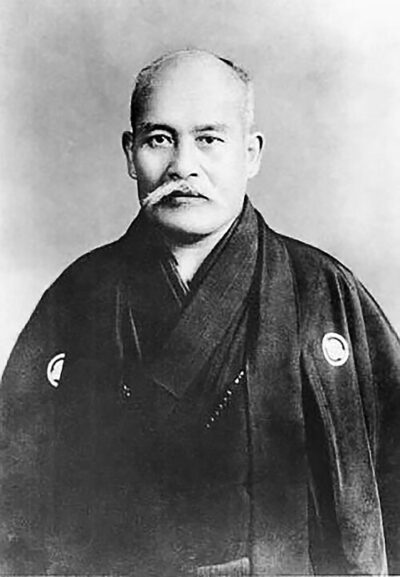
Morihei Ueshiba
Morihei Ueshiba was a Japanese aikidoka. Born December 14, 1883, in Tanabe. Died April 26, 1969, in Tokyo. Positions held include local assemblyperson of Japan (1918–) and dōshu. Awards include Order of the Rising Sun, 4th class, Medal with Purple Ribbon and Order of the Sacred Treasure, 3rd class.
Facts
23 facts · 2 confirmed by two sources · 3 cited · 17 from one source · 1 where the sources disagree
What’s different
- Died in: we show Tokyo (Sources disagree). Wikidata also lists Iwama
Where this comes from
Papalocal keeps its own record. It started from these sources; what each one said is kept here as it was copied, so a change on their side never changes this page by itself. Tap one to read its version.
What Wikidata says · copied November 16, 2026 · revision 2565549701
- Described as
- Japanese aikidoka (1883-1969)
- Other names
- Ōsensei
- Born
- December 14, 1883 · 1 reference
- Died
- April 26, 1969 · 2 references
- Born in
- Tanabe
- Died in
- Tokyo; Iwama
- Buried in
- Kōzan-ji Temple
- Cause of death
- liver cancer
- Citizen of
- Japan; Empire of Japan (–1947)
- Occupation
- sensei; aikidoka; military personnel · 1 reference; martial artist · 1 reference
- Positions held
- local assemblyperson of Japan (1918–); dōshu · 1 reference
- Member of
- Aikikai
- Sport
- aikido
- Awards
- Order of the Rising Sun, 4th class (1964); Medal with Purple Ribbon (1960); Order of the Sacred Treasure, 3rd class (1969)
- Children
- Kisshomaru Ueshiba · 1 reference
- Religion
- Oomoto
- Military rank
- Sergeant
- Height
- 1.56 m (5 ft 1 in)
- Wikipedias with a page
- 67
Wikidata item Q182130 (wikidata.org/wiki/Q182130), public domain (CC0). Copied November 16, 2026.
What Wikipedia says · copied November 16, 2026 · revision 1385899193
Morihei Ueshiba (植芝 盛平, Ueshiba Morihei; December 14, 1883 – April 26, 1969) was a Japanese martial artist and founder of the martial art of aikido. He is often referred to as "the founder" Kaiso (開祖) or Ōsensei (大先生/翁先生), "Great Teacher".
The son of a landowner from Tanabe, Ueshiba studied a number of martial arts in his youth, and served in the Japanese Army during the Russo-Japanese War. After being discharged in 1907, he moved to Hokkaido as the head of a pioneer settlement; here he met and studied with Takeda Sōkaku, the headmaster of Daitō-ryū Aiki-jūjutsu. On leaving Hokkaido in 1919, Ueshiba joined the Ōmoto-kyō movement, a Shinto sect, in Ayabe, where he served as a martial arts instructor and opened his first dojo. He accompanied the head of the Ōmoto-kyō group, Onisaburo Deguchi, on an expedition to Mongolia in 1924, where they were captured by Chinese troops and returned to Japan. The following year, he had a profound spiritual experience, stating that, "a golden spirit sprang up from the ground, veiled my body, and changed my body into a golden one." After this experience, his martial arts technique became gentler, with a greater emphasis on the control of ki.
Ueshiba moved to Tokyo in 1926, where he set up what would become the Aikikai Hombu Dojo. By this point he was comparatively famous in martial arts circles, and taught at this dojo and others around Japan, including in several military academies. In the aftermath of World War II the Hombu dojo was temporarily closed, but Ueshiba had by this point left Tokyo and retired to Iwama, and he continued training at the dojo he had set up there. From the end of the war until the 1960s, he worked to promote aikido throughout Japan and abroad. He died from liver cancer in 1969.
After Ueshiba's death, aikido continued to be promulgated by his students (many of whom became noted martial artists in their own right). It is now practiced around the world.
- Born, in its opening lines
- December 14, 1883
- Died, in its opening lines
- April 26, 1969
From the Wikipedia article “Morihei Ueshiba” (en.wikipedia.org/wiki/Morihei_Ueshiba), by its contributors, under CC BY-SA 4.0 (creativecommons.org/licenses/by-sa/4.0/). Copied November 16, 2026; not changed.
Confirmed Two sources agree. Cited One source, and it names where it got it. One source One source, without a reference of its own. Sources disagree The sources disagree. We show the best-supported value and keep theirs below.
