
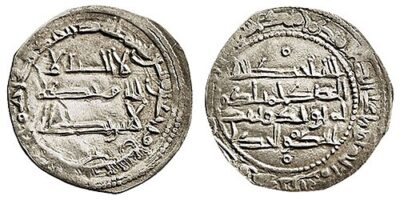
Muhammad I of Córdoba was an Emir of Córdoba from 852 to 886. Born March 823, in Córdoba. Died August 4, 886, in Córdoba. Positions held include emir of Cordoba (852–886).
Facts
11 facts · 2 confirmed by two sources · 0 cited · 9 from one source
What’s different
- Born: we show March 823 (Confirmed). Wikidata also lists April 823
Where this comes from
Papalocal keeps its own record. It started from these sources; what each one said is kept here as it was copied, so a change on their side never changes this page by itself. Tap one to read its version.
What Wikidata says · copied November 16, 2026 · revision 2568500563
- Described as
- Emir of Córdoba from 852 to 886
- Other names
- Muhammad I of Cordoba, Abū ʿAbdallāh Muḥammad I b. ʿAbd al-Raḥmān II, Muḥammad I
- Born
- March 823 · 1 reference; April 823 · 1 reference
- Died
- August 4, 886
- Born in
- Córdoba
- Died in
- Córdoba
- Citizen of
- Emirate of Córdoba
- Occupation
- monarch
- Positions held
- emir of Cordoba (852–886)
- Children
- Al-Mundhir of Córdoba · 1 reference; Abdullah ibn Muhammad al-Umawi
- Father
- Abd ar-Rahman II
- Religion
- Islam
- Wikipedias with a page
- 37
Wikidata item Q356624 (wikidata.org/wiki/Q356624), public domain (CC0). Copied November 16, 2026.
What Wikipedia says · copied November 16, 2026 · revision 1359543112
Muhammad I of Cordoba (Arabic: محمد بن عبد الرحمن الأوسط; 823–886) was the Fifth Umayyad ruler of al-Andalus. He ruled during a time of thriving art, architecture and culture in Islamic Iberia in the 9th century, turning Cordoba into a cultural and political center.
- Born, in its opening lines
- 823
- Died, in its opening lines
- 886
From the Wikipedia article “Muhammad I of Córdoba” (en.wikipedia.org/wiki/Muhammad_I_of_Córdoba), by its contributors, under CC BY-SA 4.0 (creativecommons.org/licenses/by-sa/4.0/). Copied November 16, 2026; not changed.
Confirmed Two sources agree. Cited One source, and it names where it got it. One source One source, without a reference of its own. Sources disagree The sources disagree. We show the best-supported value and keep theirs below.
